
Smart Grid Deployment Challenges: Technology, Integration, Cybersecurity, Data and Workforce Issues

Reading Time: 13 minutesSmart grid challenges explained: how legacy systems, interoperability, communication, cybersecurity, data quality, cost and workforce issues affect smart grid deployment, and how utilities can address them.
Future Smart Grid Technology: AI, Distributed Energy, Storage, EVs and Autonomous Operations
Reading Time: 12 minutesFuture smart grid technology explained: how AI, distributed energy resources, storage, EVs, IoT, edge computing, digital twins and automation may shape grid operations, separating current capabilities from emerging and future possibilities.
Why Smart Grids Need Real-Time Electricity Data for Visibility and Decision-Making
Reading Time: 12 minutesReal-time grid data explained: how sensors, smart meters, IoT, communication networks, SCADA, analytics and AI turn electricity data into grid visibility and better utility decisions.
Artificial Intelligence in Smart Grids: Applications in Forecasting, Fault Detection and Optimization
Reading Time: 13 minutesAI in smart grids explained: how machine learning supports load and renewable forecasting, fault detection, predictive maintenance and grid optimization, working alongside sensors, IoT, SCADA, DMS and EMS.
IoT in Smart Grids: How Connected Sensors Enable Real-Time Monitoring and Grid Intelligence

Reading Time: 12 minutesIoT in smart grids explained: how connected sensors, gateways, communication networks, analytics and utility control systems enable real-time monitoring, reliability and grid intelligence.
Smart Grid Communication Networks: RF Mesh, Cellular, Fiber and Other Connectivity Options

Reading Time: 21 minutesSmart grid communication explained: how RF mesh, cellular, fiber, private networks and other connectivity options carry data between field devices, substations and utility control systems, and how utilities choose between them.
How Smart Grid Technology Works From Field Devices to Utility Control Systems
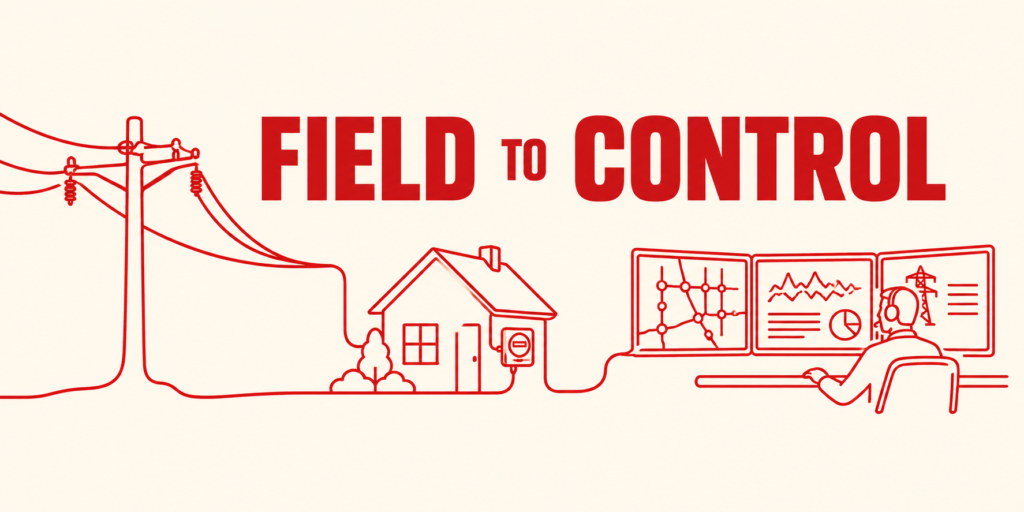
Reading Time: 13 minutesHow smart grid technology works from field devices to utility control systems: sensors, smart meters, IEDs, RTUs, communication, SCADA, AMI, DMS, EMS, analytics, operators and automation in one closed loop.
Key Components of a Smart Grid: Smart Meters, Sensors, Communications, Automation and Analytics
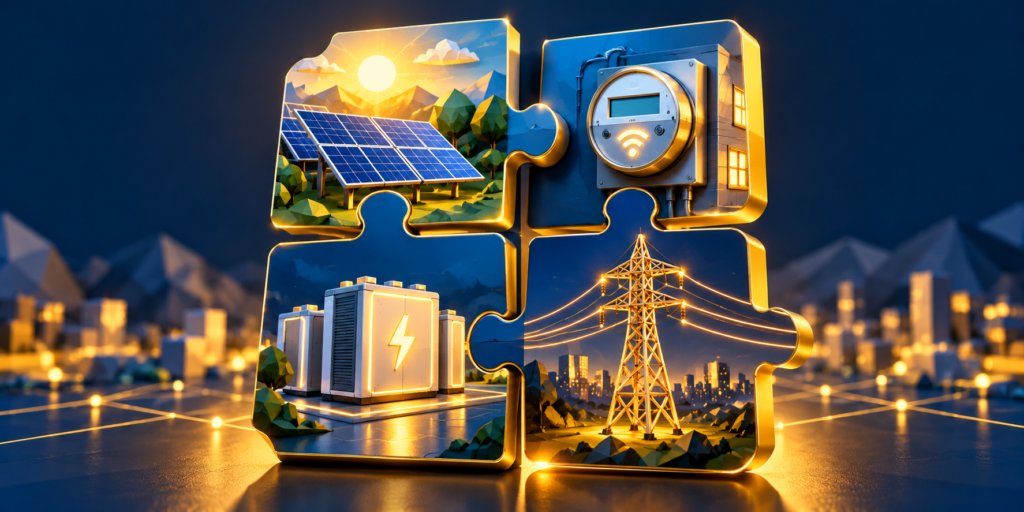
Reading Time: 16 minutesSmart grid components explained: smart meters, AMI, sensors, IoT, communication networks, SCADA, RTUs, IEDs, DMS, EMS, automation, storage, DERs, analytics and cybersecurity, and how they work together.
Smart Grid vs Traditional Grid: Architecture, Capabilities, Data Flow and Operational Differences
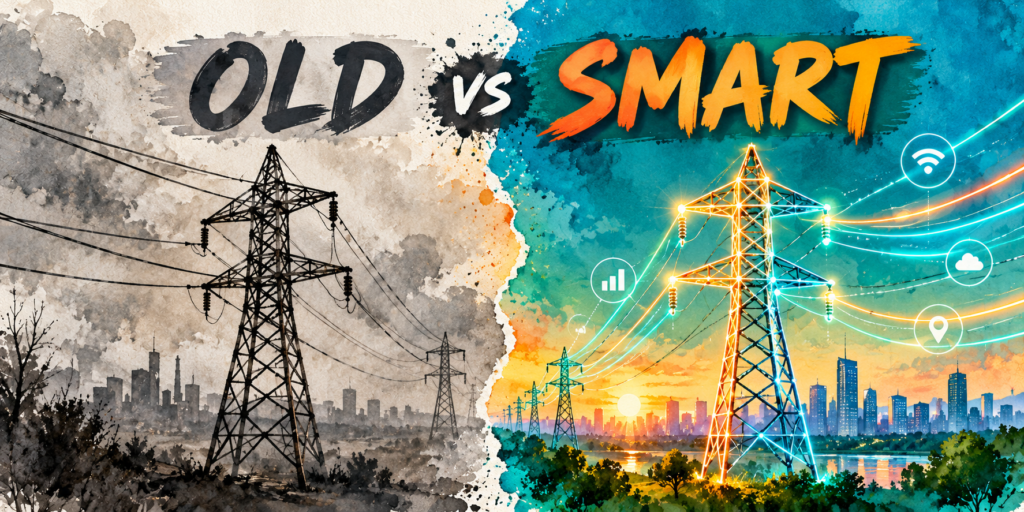
Reading Time: 13 minutesSmart grid vs traditional grid: a detailed comparison of architecture, power flow, data flow, metering, communication, automation, maintenance, DERs, EVs, storage, analytics, cybersecurity and utility applications.
What Is a Smart Grid? Architecture, Technologies, Communication and Utility Applications
Reading Time: 14 minutesA smart grid combines power infrastructure with sensors, AMI, communication, automation and analytics. This guide explains smart grid architecture, components, communication, DERs, EVs, storage, cybersecurity, benefits, challenges and a utility roadmap.