Data Centers & Electricity · AI Data Center Energy
Data center power quality describes the electrical condition of the supply that servers, cooling and networking actually receive. This guide covers voltage, harmonics, disturbances and the monitoring needed to investigate them with evidence.
Servers, storage, networking and cooling equipment all depend on electricity that stays within the conditions they were designed for. Data center power quality describes those conditions, including voltage, frequency, waveform shape and disturbances, and it needs to be understood and measured, not assumed.
Introduction: Why Electrical Conditions Matter Beyond Availability
A facility can have power available at all times and still experience problems from voltage dips, distorted waveforms or switching transients. Power quality is related to reliability, but it is not the same thing. Reliability asks whether supply is present. Power quality asks whether the supply, and the electrical environment inside the facility, are suitable for the connected equipment.
This article introduces voltage stability, frequency, harmonics, transients and monitoring, and explains how they interact with the utility connection, transformers, UPS equipment and downstream loads. It avoids universal acceptance limits. Where limits are needed, they come from the applicable standards, equipment manufacturers and utility requirements for the site.
What Is Data Center Power Quality?
In practical engineering terms, power quality is the degree to which the voltage and current at a point in the system match what connected equipment can tolerate and what the system is intended to deliver. The characteristics that matter include voltage magnitude, frequency, waveform shape, balance between phases and the presence of transient events.
It helps to separate related terms. Availability is the proportion of time power is present. Reliability concerns how often and how long interruptions occur. Resilience concerns the ability to withstand and recover from disruptive events. Power quality concerns the condition of the electricity while it is present. A system can score well on one and poorly on another.
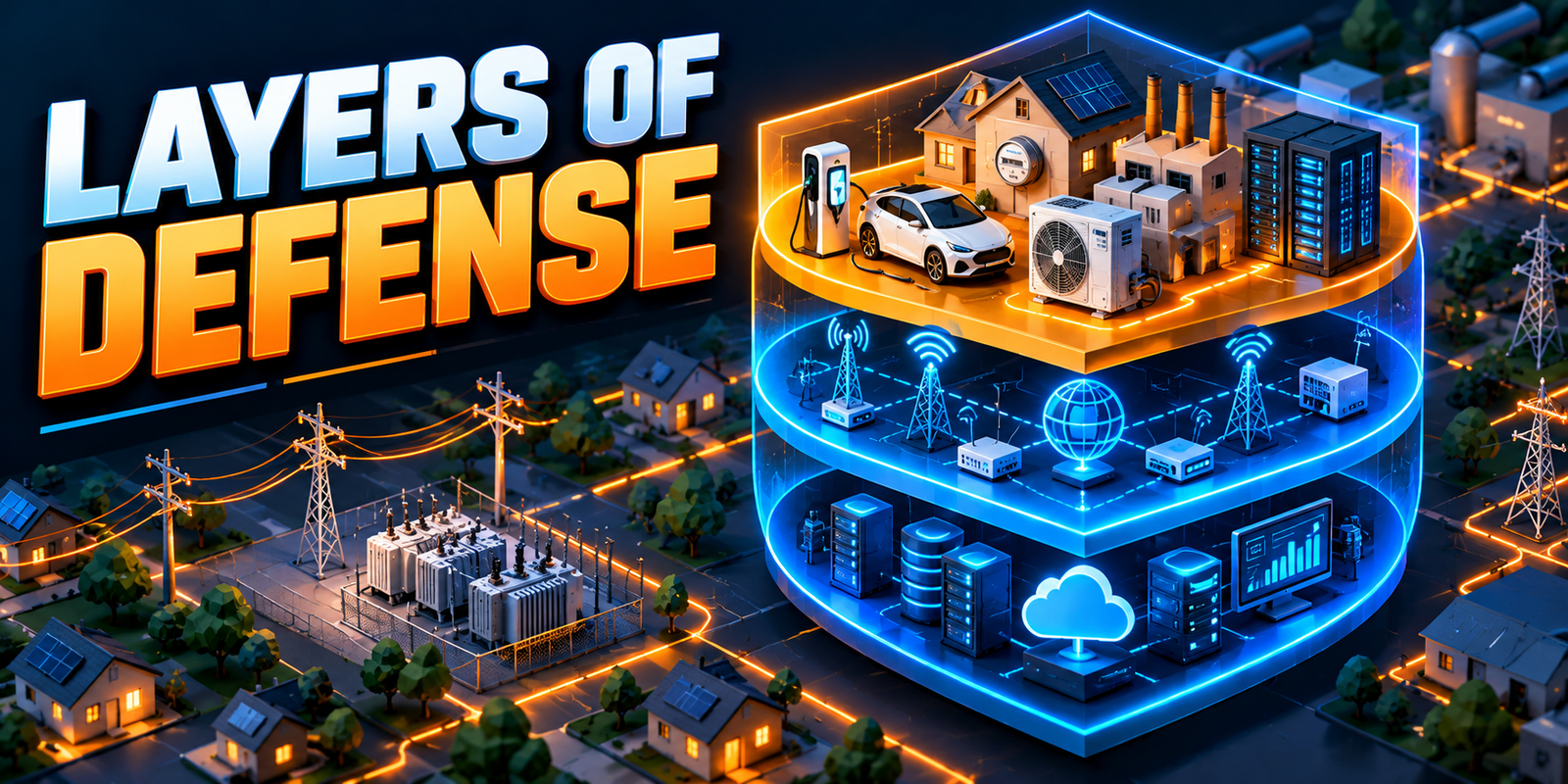
Conditions are shaped along the whole chain: the utility supply, transformers, switchgear, UPS equipment, distribution and the loads themselves. Loads can also change the conditions they see. For that reason, both incoming power and internal electrical conditions may need assessment. For background on how supply reaches a facility, see our guide to transmission and distribution networks.
Why Power Quality Matters for Data Centers
Power disturbances can affect sensitive IT equipment and the systems that support it. Servers, storage and network devices rely on internal power supplies that tolerate a range of conditions, and cooling equipment, UPS systems and protection devices each respond to disturbances in their own way. Possible outcomes range from no visible effect to nuisance alarms, unexpected UPS operation, equipment resets or accelerated wear. Not every event causes a failure, and sensitivity differs between facilities and between equipment generations.
Modern and AI-oriented facilities add reasons for care. Dense computing loads, power-electronic conversion and fast load changes alter the electrical behavior that engineers must consider. The effect depends on the specific design, so load characteristics and electrical interactions should be assessed for each site. Our overview of what causes power grid failures shows the wider network disturbances that can reach a facility.
Finally, monitoring and troubleshooting need evidence. Assuming a cause, such as blaming the utility or a particular load, can lead to wasted effort and the wrong fix.
Main Power Quality Parameters
Several parameters describe electrical conditions. Each can be measured, but acceptable ranges depend on the equipment, the standards that apply and the utility requirements for the site. Standards families such as IEC 61000-4-30 (measurement methods), IEEE 1159 (monitoring practice), IEEE 519 (harmonics) and EN 50160 (public supply voltage characteristics) are commonly referenced. Their applicability depends on jurisdiction and project, and the current editions should be checked.
Table 1: Power Quality Parameters and Their Meanings
| Parameter or Disturbance | General Meaning | Potential Relevance to Data Centers | How It May Be Assessed |
|---|---|---|---|
| Voltage magnitude and variation | The RMS voltage level and its slow changes | Affects equipment operation and UPS input conditions | Trend recording at relevant points |
| Frequency deviation | Departure from nominal system frequency | Relevant to generator operation and some equipment | Frequency logging, especially on generator supply |
| Voltage sag and swell | Short-duration drop or rise in RMS voltage | May trigger UPS or equipment responses | Event capture with magnitude and duration |
| Interruptions | Loss of supply, short or sustained | Triggers backup systems | Event records, UPS logs, utility information |
| Transients | Very fast voltage or current disturbances | Can stress insulation and electronics | High-speed waveform capture where supported |
| Harmonics | Waveform distortion at multiples of the fundamental frequency | Affects heating and interactions among equipment | Harmonic measurement of voltage and current |
| Voltage unbalance | Differences among phase voltages | Can cause uneven loading and heating | Three-phase measurement and trending |
| Power factor and reactive power | Relationship between active and apparent power | Affects current, loading and capacity | Metering of power quantities |
| Flicker and other disturbances | Repetitive voltage fluctuation | May indicate fluctuating loads or weak supply | Flicker measurement; investigation of load behavior |
Voltage Sags, Swells and Interruptions
A voltage sag is a short-duration reduction in RMS voltage, while a swell is a short-duration increase. An interruption is a loss of voltage. Standards classify these events by magnitude and duration, and definitions vary, so the applicable standard should be named when events are reported. Brief disturbances differ from sustained interruptions, which are typically what backup generation is intended to cover.
Sources include network faults, switching events, large load changes and facility equipment behavior. The effect depends on disturbance characteristics, equipment design, protection settings and system architecture. A sag that one piece of equipment rides through may cause another to reset.
Monitoring, event records and engineering investigation help determine what happened. UPS systems can support loads during many disturbances, but not every sag causes an outage, and a UPS does not always remove every disturbance. Settings, topology and operating conditions all matter.
Harmonics and Nonlinear Loads
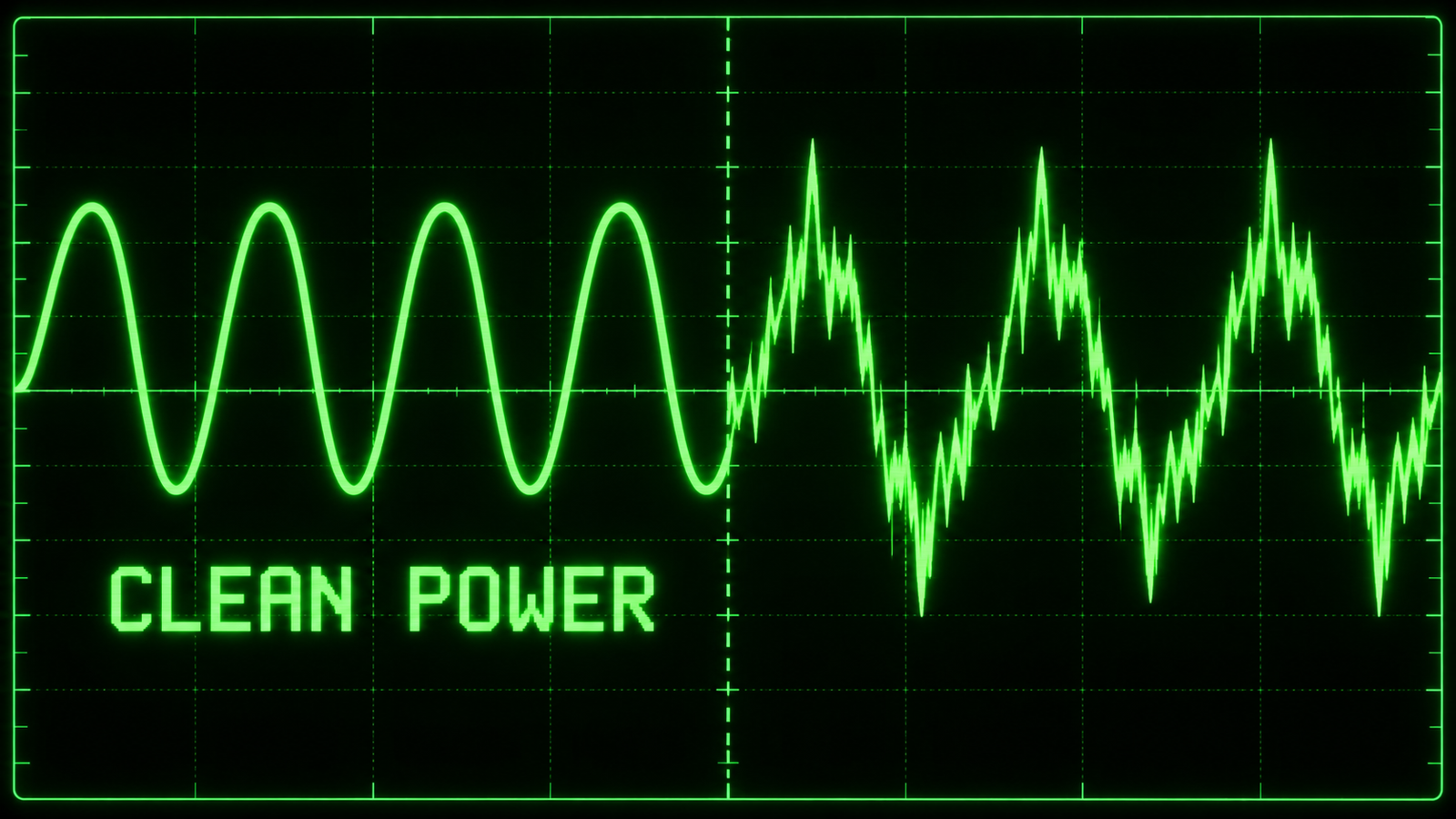
Harmonic distortion is the presence of voltage or current components at whole-number multiples of the fundamental frequency, such as the 50 or 60 Hz supply. When added to the fundamental, these components change the waveform from a clean sine wave.
Nonlinear loads draw current that is not proportional to voltage. Switch-mode power supplies, UPS rectifiers, variable-speed drives on fans and pumps, battery chargers and some lighting equipment are typical examples. Some AI computing loads also change quickly, which affects how the electrical system responds.
Harmonic current is produced by the load. Harmonic voltage distortion results when that current flows through the impedance of the supply and distribution system. The same load can produce different voltage distortion at different points, so assessment should consider the complete installation, not one device in isolation.
Possible effects include extra heating in conductors and transformers, higher neutral currents in some four-wire systems, stress on capacitors and unexpected behavior of protection or control equipment. Whether these appear depends on the design and the level of distortion.
Table 2: Harmonic Sources and Assessment Methods
| Potential Source | Possible Electrical Effect | Assessment Approach |
|---|---|---|
| IT power supplies | Harmonic current in distribution and neutrals | Current harmonic measurement at distribution boards |
| UPS rectifiers or converters | Input current distortion; interaction with generators | Measurements at UPS input under realistic load |
| Variable-speed drives in cooling | Distortion on mechanical-plant feeders | Measurements at drive supplies and shared buses |
| Lighting and chargers | Smaller contributions that add up | Survey of connected equipment and sample measurement |
| Interaction with capacitors or filters | Possible resonance and unexpected amplification | Frequency-dependent analysis by qualified engineers |
Power Factor, Reactive Power and Three-Phase Imbalance
Active power (kW) does the useful work, reactive power (kvar) supports electric and magnetic fields, and apparent power (kVA) combines the two. Power factor relates active to apparent power. A lower power factor means more current is needed for the same real power, which can increase loading on conductors, transformers and generators. Distortion also affects true power factor, not only phase shift.
Three-phase unbalance occurs when voltages or currents differ among phases. It can result from uneven load distribution or supply conditions, and may lead to uneven heating or additional stress on some equipment. Balanced loading and appropriate equipment selection reduce the problem.
Power factor correction and other interventions should be based on engineering assessment. No single device suits all facilities, and poorly coordinated correction equipment can introduce issues such as resonance with harmonics. Our article on how power moves from generation to consumption explains why reactive power matters across the network.
Common Sources of Data Center Power Quality Problems
Problems can originate outside the facility, such as faults on the utility network, or inside it, such as transformers, UPS systems, generators, switching operations, nonlinear loads, cooling plant, poor connections and maintenance issues. The table lists possible causes only. They are not diagnoses, and confirming any of them takes measurement, event logs and qualified analysis.
Table 3: Common Disturbance Sources and Symptoms
| Possible Source | Potential Symptom | What to Investigate |
|---|---|---|
| External utility network | Sags, swells or interruptions seen at the service entrance | Event time, magnitude and duration; utility records |
| Transformers and distribution | Heating, voltage deviations, unbalance | Loading, tap settings, connections, harmonic content |
| UPS systems and converters | Unexpected transfers, distortion, alarms | UPS event logs, input and output measurements, settings |
| Generators and transfer equipment | Voltage or frequency deviation during transfer | Transition records, load acceptance, settings |
| Switching operations and protection | Transients, dips on starting or switching | Switching logs, protection events, timing |
| Nonlinear and power-electronic loads | Distortion, heating, nuisance alarms | Harmonic currents and system impedance |
| Cooling systems and auxiliary loads | Dips or flicker when large motors start or change speed | Correlation of events with plant operation |
| Poor connections, faults, maintenance issues | Intermittent disturbances, local heating | Inspection and thermal assessment by qualified personnel |
Power Quality Monitoring Requirements
Monitoring turns power quality from guesswork into evidence. Useful tools include power-quality analyzers and suitable meters, voltage and current measurement, harmonic measurement, and event or waveform capture where the equipment supports it. Measurement methods are covered by standards such as IEC 61000-4-30 and IEC 61000-4-7, which should be checked for the version and class that apply.
Facilities may use continuous monitoring, targeted investigations, or both. Continuous monitoring builds a baseline and catches intermittent events, while targeted work answers specific questions. Time synchronization across monitoring systems is important, because comparing records from different points requires a common time reference.
Other elements include alarm configuration, event logging, data retention, reporting and trend analysis. Monitoring scope depends on the facility, risk, electrical design, applicable standards and operational needs. There is no universal monitoring interval, device specification or legal requirement that fits every site, so requirements should come from the project, the standards that apply and the authority having jurisdiction.
Where Should Data Centers Monitor Power Quality?
Placement decides what the data can tell you. Measurements at several points help show whether a disturbance originates upstream or inside the facility. Monitoring points should be designed by qualified engineers and suited to the system.
Table 4: Monitoring Locations and What They Reveal
| Monitoring Location | What It Can Reveal | Important Consideration |
|---|---|---|
| Service entrance or point of connection | Conditions arriving from the utility | Arrangements and access depend on the utility and site |
| Main switchboards and distribution | Overall conditions and load behavior inside the site | Choose representative points |
| Transformer inputs and outputs | Effects of transformation, loading and distortion | Useful where transformer behavior is in question |
| UPS input, output and bypass paths | How the UPS sees and affects conditions | Depends on what the equipment supports |
| Generator and transfer interfaces | Transition behavior, voltage and frequency on backup supply | Include records from test and real events |
| Critical distribution branches | Conditions near sensitive loads | Balance coverage against cost and data volume |
| Major loads or auxiliary equipment | Whether a specific load is the source | Typically justified by an investigation |
How to Investigate a Power Quality Event
A structured, high-level workflow keeps investigations evidence-based. All measurement and corrective work must follow site safety procedures and be carried out by qualified personnel. Unqualified staff should not work on or near energized equipment, and protection should never be bypassed to take readings.
Table 5: Power Quality Event Investigation Workflow
| Investigation Step | Evidence to Review | Intended Outcome |
|---|---|---|
| 1. Record time and symptoms | Operator reports, alarm times | A clear starting description |
| 2. Review alarms and records | UPS records, protection events, available utility information | Initial picture of what systems reported |
| 3. Examine measured data | Voltage, current, waveform, harmonic data | Objective view of the electrical event |
| 4. Compare monitoring points | Records from service entrance, UPS, downstream points | Indication of where the event appeared first |
| 5. Test plausible causes | All gathered evidence | Shortlist of hypotheses that fit |
| 6. Classify the issue | Comparison of records | External, internal, load-related or still uncertain |
| 7. Plan corrective action | Engineering analysis | Action agreed with qualified personnel |
| 8. Verify the result | Follow-up monitoring | Confirmation that the issue is addressed or needs more work |
Mitigation Strategies and Engineering Responses
Mitigation must follow diagnosis. Without enough information, no particular filter, capacitor bank, transformer or UPS configuration should be recommended. The table lists possible responses and the considerations behind them.
Table 6: Mitigation Approaches and Considerations
| Approach | When It May Apply | Consideration |
|---|---|---|
| Review equipment condition and connections | Intermittent or local problems | Performed by qualified personnel under safe procedures |
| Correct loading or phase balance | Evidence of unbalance or overloading | Confirm with measurement before and after |
| Assess transformer and distribution suitability | Heating or distortion concerns | Consider load characteristics and manufacturer guidance |
| Review UPS configuration and bypass behavior | Unexpected UPS events | Check settings against design and manufacturer advice |
| Evaluate filtering or harmonic mitigation | Harmonic levels shown to be a problem | Needs system analysis; interactions with other equipment |
| Review grounding, bonding and protection | Evidence of noise or protection issues | Qualified engineering analysis required |
| Improve event monitoring and alarms | Gaps in records or late response | Define alarm meaning and response |
| Coordinate with the utility | Evidence points upstream | Share time-aligned records |
| Review maintenance and commissioning practice | Recurring or unexplained issues | Document and verify changes |
Power Quality and UPS, Generators and Backup Systems
Power conditioning and backup energy are different capabilities. A UPS can respond to some supply disturbances depending on its topology and operating conditions, and a double-conversion design can isolate loads from many input variations. But a UPS has its own interactions. Its rectifier can draw distorted current, and its behavior depends on settings and bypass state.
Generators and transfer equipment bring their own transition and power-quality considerations. Voltage and frequency may behave differently on generator supply, particularly when large or nonlinear loads are applied. Battery storage and power converters also interact with facility loads through their control systems.
The complete system should be assessed during design, commissioning and testing. Backup power does not automatically resolve every power-quality issue. For the wider architecture, see our related discussion in the smart grid overview.
Digital Monitoring, Smart Grids and AI-Based Analytics
Several digital tools can support power-quality work. SCADA and facility monitoring systems collect status and alarms. Where deployed and applicable, advanced metering infrastructure provides utility-side data, though its resolution may not capture fast events. Dedicated power-quality platforms and equipment health systems add trend analysis and event management. Our articles on grid sensors and IoT and power system automation describe the data layer.
AI and machine learning can help identify unusual patterns or correlate events across systems, as discussed in AI in smart grids. Results depend on data quality, correct sensor placement, time alignment and context. AI cannot independently diagnose every event or guarantee better outcomes, and its output needs engineering review.
A Hypothetical Data Center Power Quality Investigation
This is a hypothetical example. It does not describe a real customer or incident, uses no measured values and does not represent real results.
A facility reports intermittent equipment alarms and occasional unexpected UPS events on one hall. The team starts by recording times and symptoms, then compares three sources: service-entrance measurements, UPS event records and downstream monitoring.
Observations are what the records show. Perhaps UPS logs mark input excursions at certain times, while the service-entrance record shows nothing at those times, or shows a matching event. Hypotheses are the possible explanations: an upstream disturbance, an internal switching or large-load event, a UPS setting issue or a loose connection. Time-aligned records help separate them. If a disturbance appears first at the service entrance, an upstream cause becomes more plausible. If it appears only downstream, internal causes move to the front. If the records do not agree, the issue remains uncertain, and more monitoring is needed.
No cause is confirmed until the evidence supports it. Corrective action is planned with qualified engineers and verified with follow-up monitoring. Limitations include gaps in records, clock differences and monitoring points that do not capture the relevant event.
Best Practices for Data Center Power Quality Management
Table 7: Power Quality Management Checklist
| Practice | Why It Matters | What to Document |
|---|---|---|
| Define monitoring objectives | Focuses data collection | Questions the monitoring should answer |
| Identify suitable monitoring points | Placement determines insight | Point list and rationale |
| Review design and load characteristics | Reveals likely interactions | Load types, converters, distribution layout |
| Maintain accurate event records | Supports investigation and trends | Event logs and reports |
| Coordinate timestamps | Allows comparison across systems | Time source and checks |
| Investigate before mitigating | Avoids unnecessary or wrong fixes | Evidence and hypotheses |
| Review UPS, transformer, generator and distribution interfaces | Interactions often cause issues | Interface review results |
| Set alarm-response and escalation procedures | Ensures events are acted on | Procedures and owners |
| Involve qualified electrical engineers | Safety and technical soundness | Roles and approvals |
| Review standards and local requirements | Defines applicable limits | List of applicable documents |
| Document findings and verify corrective action | Closes the loop | Findings, actions, follow-up results |
The Future of Data Center Power Quality
Established practice rests on standard measurement methods, permanent monitoring at key points and engineer-led investigation. These are well proven and continue to underpin the field.
Developments that are emerging include more connected electrical assets, richer digital monitoring, power-electronic loads with faster dynamics, AI-based analytics for pattern recognition and closer coordination between data centers and utilities as grids modernize. Our piece on grid modernization and real-time visibility covers the utility side. How quickly these approaches spread will vary by region and project, so predictions should be treated cautiously.
Conclusion
Voltage variations, harmonics, disturbances and other electrical conditions all deserve suitable assessment in data centers. Data center power quality is best managed through appropriate monitoring, evidence-based investigation and coordinated engineering across the utility interface, transformers, UPS systems, distribution and loads.
No facility can promise zero disturbances or guaranteed uptime. What teams can do is measure, understand and act on what the evidence shows, and verify that corrective action works.
Frequently Asked Questions
What is data center power quality?
It is the condition of the electricity supplied to data center equipment, including voltage, frequency, waveform shape, balance and disturbances, and how well that suits the connected loads.
How does data center power quality work?
Conditions are set by the utility supply, transformers, distribution, UPS equipment and the loads, which also influence each other. Monitoring and analysis show whether conditions are suitable.
Why is data center power quality important?
Disturbances can lead to alarms, unexpected UPS operation, resets or extra equipment stress. Effects vary by facility, so understanding conditions helps prevent problems and speeds up troubleshooting.
What are the main components of data center power quality?
Main elements include voltage and frequency conditions, sags, swells and interruptions, transients, harmonics, unbalance, power factor, and the equipment and monitoring that influence or measure them.
What are the challenges of data center power quality?
Challenges include identifying whether causes are external or internal, interactions among equipment, nonlinear and fast-changing loads, limited monitoring, unsynchronized records and the need for qualified analysis.
Where is data center power quality used?
The concept applies in enterprise, colocation, cloud and AI data centers, and in other facilities with sensitive electronic equipment and in utility interconnection discussions.
What causes poor power quality in a data center?
Possible causes include utility disturbances, switching events, nonlinear loads, UPS or generator interactions, large cooling loads and connection or maintenance problems. Measurement is needed to confirm the actual cause.
What are voltage sags and harmonic distortion?
A voltage sag is a short drop in RMS voltage. Harmonic distortion is waveform distortion at multiples of the fundamental frequency, usually caused by nonlinear loads.
How is data center power quality monitored?
Through power-quality meters or analyzers, event and waveform capture, harmonic measurement and time-synchronized logs at selected points. Scope depends on the facility and applicable standards.
Can a UPS eliminate all power-quality problems?
No. A UPS can condition power and support loads during many disturbances, but its effectiveness depends on topology, settings and load, and it can also introduce its own interactions.
Have a question about power systems?
Questions about this topic or ideas for future articles? Get in touch.
Contact Us
I share real stories, practical ideas and honest perspectives on business, marketing and life. This blog is a space to learn, grow and connect.