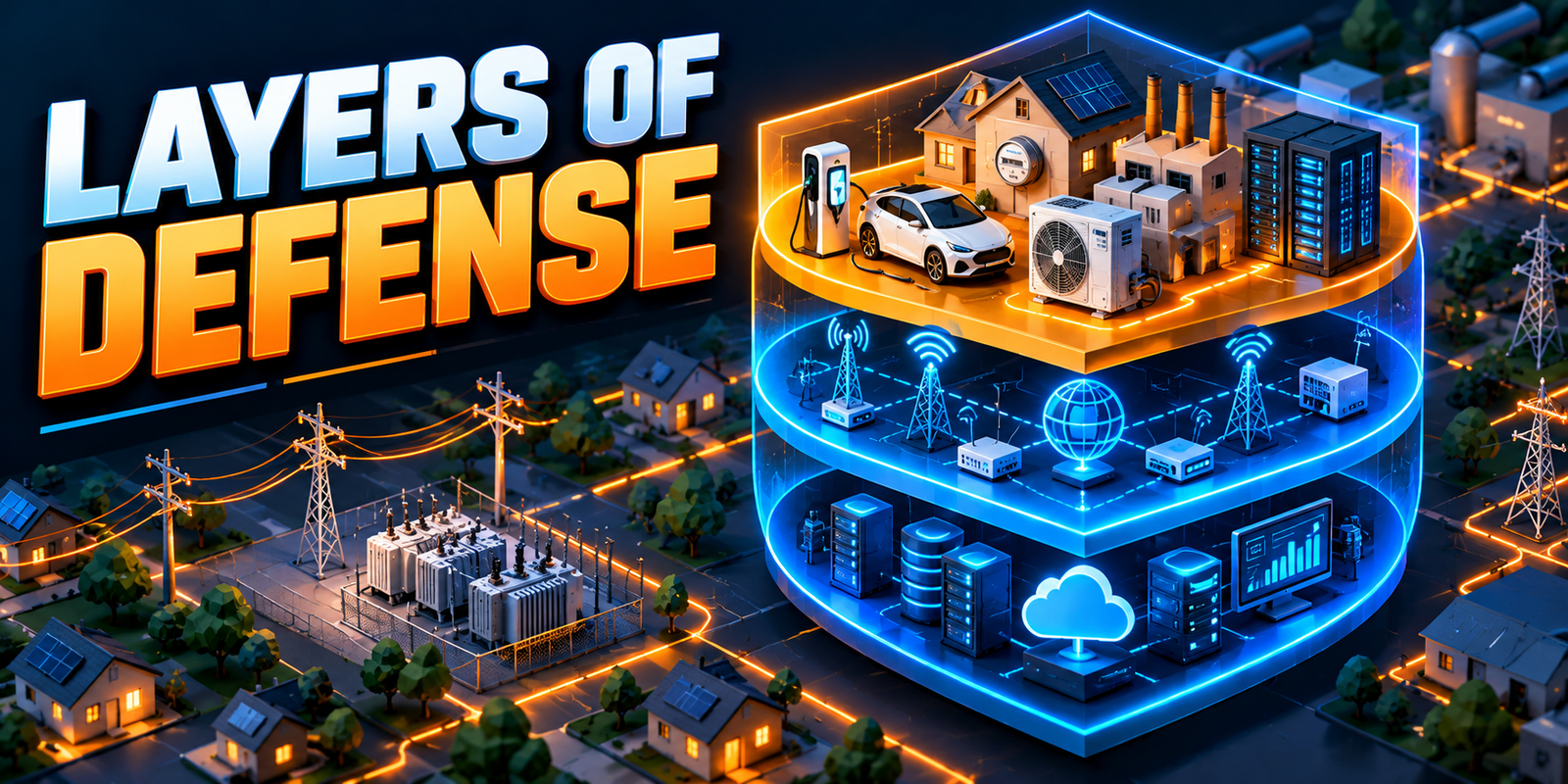

The future of advanced metering infrastructure (AMI) is moving toward more intelligent, connected and data-driven systems, in which smart meters, communication networks, the head-end system (HES), the meter data management system (MDMS), analytics, artificial intelligence (AI) and grid-edge technologies work together. The result is richer visibility and more flexible utility operations. Discussions about the AMI future usually describe a gradual evolution rather than a single leap:
Meter reading
Manual or periodic collection of consumption.
Smart metering
Digital meters with remote communication.
AMI
Meters, networks, HES and MDMS working as a system.
Advanced data management
Better data quality, integration and analytics.
Intelligent AMI
Analytics and AI applied to meter and event data.
Grid-edge intelligence
Visibility and decision support close to customers and distributed resources.
The pace will differ by utility, geography, regulation, existing infrastructure and business needs. This article separates what is in use today from what is emerging and what is only a possibility, and it makes no promise about timing.
- AMI is evolving beyond basic meter reading.
- Smart meters are becoming richer sensing points.
- AI and machine learning can add analytical capabilities, but they are optional.
- Edge computing may enable faster local processing where devices support it.
- MDMS remains important for managed, validated meter data.
- DERs, EVs and storage increase the value of granular data.
- Cybersecurity and interoperability become more important as systems connect.
- Future AMI should be seen as part of broader grid modernization.
What Is the Future of AMI?
The future of advanced metering infrastructure is likely to involve more intelligent meters, higher-quality data, advanced analytics, edge computing and deeper integration with distributed energy resources and smart-grid systems.
AMI began as a way to collect meter data remotely for billing. Over time, utilities added interval data, event notifications, remote operations and integration with outage, billing and analytics systems. Today, many utilities want more: higher data frequency, finer granularity and connections to grid applications. Connected devices such as solar inverters, batteries and EV chargers add to that demand, because they change how and when customers use the network.
AMI also sits inside a larger picture. For the wider context, see our guides to smart grid architecture and utility applications and to why grid modernization depends on better electricity data.
The AMI Future: Current, Emerging and Potential
- Current AMI: smart meters, communication networks, HES, MDMS, interval data and integration with billing and operational systems.
- Emerging AMI: cloud and hybrid platforms, API-driven integration, advanced analytics, early AI and machine learning use, and more event data.
- Potential future AMI: local processing in some devices, broader DER and EV visibility and deeper links to automation. These are possibilities, not guaranteed outcomes.
Why Is AMI Evolving?
Several pressures push AMI beyond its original purpose:
- Distributed energy resources and renewables: generation is moving closer to customers and varies with weather.
- EV adoption and battery storage: new, flexible and sometimes large loads appear at the customer connection.
- Changing load patterns and demand response: utilities need to see and measure demand more precisely.
- Grid modernization and reliability requirements: better data supports planning and operations.
- Customer visibility and operational analytics: customers and utilities both want clearer information.
- Cybersecurity requirements: more connected devices raise the bar for protection.
These drivers do not apply equally everywhere, and no adoption rates are claimed here.
From Smart Meter to Intelligent Meter
The meter itself is changing. A rough progression looks like this:
| Stage | Typical Characteristics |
|---|---|
| Traditional meter | Cumulative consumption, read manually, little or no communication |
| Smart meter | Digital measurement, interval data, remote communication, basic events |
| Advanced smart meter | Richer measurements, remote configuration, diagnostics, firmware management |
| Potential intelligent meter | Event awareness and local processing, where supported |
Possible capabilities along the way include interval measurement, event detection, power-quality-related measurements where supported, local data processing, communications, diagnostics, remote configuration, firmware management and edge analytics where supported. Not every future smart meter will contain AI or edge computing. Many deployments will continue to rely on simpler meters, and that can be entirely appropriate.
What Is Intelligent Metering?
Intelligent metering describes meters and metering systems that go beyond basic interval measurement through advanced sensing, event awareness, diagnostics, communications and, in some designs, local processing.
“Intelligent meter” is an evolving capability concept, not a universally standardized device category. Capabilities differ between products and utilities.
| Aspect | Smart Meter | Intelligent Meter (Evolving Concept) |
|---|---|---|
| Measurement | Interval energy and basic parameters | Wider measurements where supported |
| Communication | Two-way communication with utility systems | Two-way, possibly with richer data and local interfaces |
| Event handling | Basic events and alarms | More detailed event detection, possibly classified locally |
| Local processing | Limited | Filtering or aggregation where supported |
| Analytics | Performed in back-end systems | Back-end, with some edge analytics where supported |
| Diagnostics | Basic device status | Broader self-diagnostics where supported |
| Grid-edge capabilities | Customer-point measurement | Greater support for DER and local visibility, depending on design |
Intelligent Metering and Power Quality
Some meters can report voltage, current, power-related measurements, events and power-quality indicators. Support varies by meter and configuration, and not every smart meter provides full power-quality monitoring. Where available, these measurements can add visibility at the customer connection point.
Intelligent Metering and Local Intelligence
Possible local functions include event classification, anomaly detection, data filtering, local aggregation and communication optimization. All are capability-dependent and emerging, and they should be tested before relying on them.
Future AMI Architecture
A future-oriented AMI may extend the familiar chain with optional edge and analytics layers. One possible forward path is:
Smart or intelligent meter
Measures and records data and events.
Local or edge processing, where applicable
Filters, aggregates or classifies data near the source.
AMI communication network
Carries data to and from the utility.
HES
Manages meter communication and acquisition.
Integration layer
Connects systems through interfaces and APIs.
MDMS and data platform
Validates, stores and manages meter data.
Analytics and AI
Produce insights from managed data.
Utility applications
Billing, outage, planning, demand response and more.
Grid, customer and operational decisions
Where information becomes action.
The reverse direction matters too. Commands, configuration changes, firmware updates and signals can travel from utility applications back through the HES and network to the meter, where devices and policies allow. Future architectures may include edge gateways, data concentrators, cloud platforms, hybrid infrastructure, APIs, event-driven systems, analytics platforms and, in some cases, digital twins. No single architecture is universal.
AMI at the Grid Edge
The grid edge is the part of the electricity system closest to customers, distributed resources and field devices.
It includes smart meters, rooftop solar PV, battery storage, EV chargers, sensors, controllable loads and local controllers. AMI can provide valuable visibility here because meters already sit at the customer connection point across the service territory. That visibility is a starting point for understanding how customer-side resources behave. For related background, see our overview of grid sensors and IoT devices.
Edge Computing in AMI
Edge computing means processing data close to where it is created rather than sending everything to a central location. In AMI, that could happen in a meter, a gateway or a data concentrator, depending on the design.
Local processing can matter for several reasons: lower latency, reduced bandwidth use, resilience when connectivity is limited, local decision support, and filtering or aggregation before data is sent. Possible applications include local anomaly detection, event processing, data filtering, communication optimization and local diagnostics.
Edge computing differs from cloud processing. Cloud platforms offer large-scale storage and compute for analysis across many meters, while edge processing handles time-sensitive or bandwidth-sensitive tasks locally. Many future designs may use both. Not all AMI meters will become edge-computing devices.
AI in Future AMI
AI and machine learning are analytical capabilities that can be applied to AMI data. They are not a mandatory part of every AMI system. A typical path is:
Raw data
As received from meters.
Managed data
Validated and stored in the MDMS or data platform.
Analytics
Reports, aggregation and statistical analysis.
AI and machine learning
Pattern recognition and prediction.
Insights and decision support
Information for people and processes.
Potential applications include anomaly detection, load forecasting, consumption pattern recognition, meter-data quality monitoring, event classification, predictive maintenance, customer usage analysis, demand forecasting and DER forecasting. For wider context, see our guide to the electric grid in 2035.
AI for Meter Data Quality
AI-assisted analytics could help detect missing data, abnormal readings, unusual consumption patterns, duplicate or inconsistent records and other quality issues, and may support predictive data-quality monitoring. This is different from the MDMS validation, estimation and editing (VEE) process, which applies defined rules and policies and is auditable. AI-assisted analytics can complement VEE by finding patterns that rules miss, but it does not replace established VEE processes.
AI for Load Forecasting
Machine learning can support short-term forecasting using demand patterns, customer segmentation, seasonal patterns, weather-related variables where applicable and DER impacts. Forecast quality depends on data quality, model design and validation, and no accuracy figures are claimed here.
AI for Anomaly Detection
Possible targets include unusual consumption, abnormal meter behavior, communication anomalies, unusual events and data-quality anomalies. Anomaly detection needs appropriate data, model validation and human oversight, because an unusual pattern is not automatically a fault.
AI and Predictive Maintenance
AMI data could contribute to predictive maintenance by highlighting unusual device behavior, communication degradation, repeated events and abnormal patterns. AMI alone cannot diagnose every equipment failure, so these signals work best alongside other data sources and engineering judgment.
The Future of Meter Data
Future AMI may produce more granular interval data, more event information, richer measurements, higher-frequency information and data from more distributed sources. That creates challenges in storage, processing, governance, cybersecurity, privacy, data quality and analytics. More data is only valuable if it is accurate, well managed and used for a clear purpose.
Future Role of MDMS
The MDMS is likely to keep providing data ingestion, VEE, meter data management, historical storage, quality management, aggregation and downstream integration. Over time, MDMS architectures may evolve toward more real-time data integration, event-driven processing, advanced analytics integration, APIs, cloud or hybrid deployment and broader data platforms.
The MDMS will not necessarily disappear or be replaced by a data lake. Responsibilities may overlap and shift depending on how each utility implements its architecture.
HES Evolution
The head-end system may also develop. Possible directions include broader protocol support, improved device management, event processing, scalable communication, API-driven integration, cloud or hybrid deployment, advanced monitoring and stronger security. Our series on AMI covers the head-end system and meter data management in more detail.
AMI Data Flow in Future Architectures
A future-oriented data flow may look like this. Edge processing and AI are optional and emerging in many settings:
Intelligent meter
Measures data and events.
Edge processing (optional, emerging)
Filters or classifies locally.
Communication network
Transports data.
HES
Acquires and routes data.
MDMS or data platform
Manages validated data.
AI and analytics (optional, emerging)
Generate insights.
Utility decision
People and processes act on information.
Grid or customer response
The outcome in the field.
AMI and Distributed Energy Resources
Rooftop solar, distributed generation, battery storage, microgrids where relevant and flexible loads are changing customer connection points from simple consumers into more active participants. AMI data can improve visibility into customer-side energy behavior. AMI alone does not control DERs, which usually need dedicated control systems and interfaces.
AMI and Solar Energy
With rooftop solar, energy can flow in both directions. Where supported, meters can record net consumption and export data and interval measurements. This supports visibility, forecasting and customer data. Tariff and metering arrangements vary by jurisdiction.
AMI and Battery Storage
AMI data may help with monitoring, energy-flow analysis, demand response, customer usage analysis and grid planning. Battery control normally involves dedicated control systems and interfaces beyond AMI alone.
AMI and Electric Vehicles
EV charging adds demand with distinct patterns. Granular data can help with charging-demand analysis, load forecasting, time-of-use programs, managed charging and grid planning. AMI does not directly control EV chargers unless it is integrated with suitable systems.
AMI and Demand Response
Future AMI can support load visibility, program measurement, consumption analysis, event evaluation, customer participation and time-based pricing where applicable.
Future AMI Communication Networks
Communication networks may evolve across RF mesh, cellular, private utility networks, fiber, low-power wide-area networks (LPWAN) where appropriate and hybrid architectures. The key concerns are reliability, coverage, latency, scalability, cybersecurity and interoperability. No technology fits every utility, and many deployments combine several. Our article on how smart meters communicate with utilities explores these options in more depth.
Interoperability in Future AMI
Interoperability becomes more important as utilities combine multiple vendors, protocols, cloud platforms, edge devices, DER systems, EV systems, analytics and grid applications. Open interfaces, APIs, standardized protocols and shared data models all help. No single standard solves every interoperability issue, so testing remains essential.
Future AMI Cybersecurity and Data Privacy
Future AMI may have a larger attack surface because of more connected devices, more communication, more APIs, cloud services, edge computing, DER integration and EV integration. Defensive controls include:
- Authentication and authorization.
- Encryption.
- Secure boot and firmware security where supported.
- Certificate and key management.
- Network segmentation.
- API security.
- Monitoring and audit logs.
- Vulnerability management.
- Incident response.
Privacy matters as well. Consumption data can reveal how people live, so utilities need clear rules on data access, retention, governance, authorization and secure sharing. Legal requirements vary by jurisdiction, so utilities should confirm local rules.
Future AMI Reliability
Reliability covers communication reliability, device availability, system availability, fault handling, redundancy, disaster recovery, monitoring and data integrity. Targets such as uptime depend on each utility and are not given here. Monitoring each layer separately makes problems easier to locate.
Automation, Autonomy and Human Oversight
Three ideas are often confused:
- Automation: predefined actions triggered by defined conditions.
- Autonomous decision support: systems that recommend actions for people to review.
- Fully autonomous grid operations: systems that operate with minimal human involvement.
AMI may contribute data and intelligence to future automation, but AMI itself is not automatically a self-healing grid. For the related automation topics, see power system automation.
Utility professionals will continue to matter. Operator review, AI recommendations, exception management, cybersecurity decisions, engineering validation, governance and safety all need human judgment. AI is a tool that supports utility engineers, not a replacement for them.
Challenges of Future AMI Adoption
- Legacy systems and integration complexity.
- Interoperability across vendors and protocols.
- Data volumes and data quality.
- Cybersecurity and privacy.
- Workforce skills.
- Investment and vendor dependency.
- Governance and regulatory requirements.
- Technology lifecycle management.
Workforce Skills and Utility Readiness
Future AMI draws on metering, electrical engineering, networking, cloud technologies, data engineering, AI and machine learning, cybersecurity, OT and IT integration and analytics. No single role covers all of these, so cross-functional teams are essential.
Utility Readiness Checklist
- Technology: meters, networks, HES and MDMS can support planned use cases.
- Data: data is accurate, mapped and governed.
- Cybersecurity: controls cover devices, networks, APIs and cloud services.
- People: teams have the needed skills and clear roles.
- Processes: workflows exist for exceptions, changes and incidents.
- Integration: interfaces to utility systems are defined and tested.
- Governance: ownership, privacy and model oversight are defined.
- Operations: monitoring, support and recovery are ready.
Current vs Emerging vs Future AMI Technology
“Potential future” entries describe possibilities. They are not guaranteed adoption.
| Area | Current | Emerging | Potential Future |
|---|---|---|---|
| Smart meters | Interval data, remote communication | Richer measurements and diagnostics | Wider local intelligence in some devices |
| Meter data | Interval data and events | Higher frequency and more event data | More distributed data sources |
| HES | Meter communication and acquisition | API-driven and cloud or hybrid options | More event processing and scale |
| MDMS | VEE, storage, integration | Analytics and API integration | Closer ties to broader data platforms |
| Communication | RF mesh, cellular, fiber, others | Hybrid networks | More flexible multi-network designs |
| Edge computing | Limited use | Pilots and early use | Wider use where justified |
| AI and ML | Back-office analytics in some utilities | Broader use cases | Deeper decision support |
| Analytics | Reporting and load analysis | Advanced analytics platforms | More real-time analysis |
| DER integration | Net metering data where supported | Better customer-side visibility | Deeper integration with DER systems |
| EV integration | Load analysis, time-of-use programs | Managed charging programs | Closer integration with charging systems |
| Storage | Visibility of net flows | Monitoring and program support | Closer coordination with storage systems |
| Cybersecurity | Encryption, access control, monitoring | Zero-trust style and API security practices | More automated defense |
| Automation | Rule-based processes | Decision support | More automated operations, with oversight |
Traditional AMI vs Future Intelligent AMI
| Aspect | Traditional AMI | Future Intelligent AMI |
|---|---|---|
| Measurement | Interval energy and basic events | Richer measurements where supported |
| Data frequency | Scheduled intervals | Potentially higher frequency |
| Communication | Mostly one network type per deployment | Hybrid networks |
| Data processing | Mainly central | Central and edge |
| Analytics | Reporting and basic analysis | Advanced analytics |
| AI | Rare | Optional decision support |
| Edge computing | Limited | Selective use |
| DER visibility | Customer-point data | Broader customer-side visibility |
| EV integration | Load analysis | Closer program integration |
| Storage integration | Limited | Closer coordination |
| Automation | Rule-based | More decision support and automation |
| Cybersecurity | Device and network controls | End-to-end, including APIs and cloud |
| Interoperability | Vendor-specific in places | Greater reliance on open interfaces |
Illustrative Future AMI Scenario
Illustrative Scenario — not a real utility project.
Imagine a future-oriented utility with intelligent smart meters, advanced communication, an HES, an MDMS, edge processing, AI analytics, rooftop solar, battery storage and EV charging. Data might flow as follows:
- A smart meter measures consumption, export and events.
- Edge processing filters and classifies some data locally.
- The AMI network carries it to the HES.
- The MDMS validates and manages the data.
- Analytics and AI examine patterns.
- Utility staff review the results and make decisions.
- Customer or grid responses follow through the right systems.
This could support load forecasting, anomaly detection, DER visibility, EV load management, demand response and operational planning. No customer, deployment size, cost, performance result or date is implied.
Roadmap Toward Intelligent AMI
- Smart meter deployment: install reliable meters.
- AMI communication: build dependable networks.
- HES and MDMS integration: connect the core systems.
- High-quality meter data: manage data quality from the start.
- Advanced analytics: use managed data for insight.
- AI and ML applications: apply where they add value.
- Grid-edge intelligence: add local processing where justified.
- DER, EV and storage integration: connect customer-side resources.
- Advanced automation: expand automation with oversight.
Utilities can progress at different speeds, and some may skip or delay stages.
Key Takeaways
- AMI is evolving beyond automated meter reading.
- Intelligent meters can provide richer data.
- AI can enhance analysis but is optional.
- Edge computing may enable local processing.
- MDMS remains important for managed data.
- DERs, EVs and storage increase the value of AMI.
- Cybersecurity and interoperability become increasingly important.
- Future AMI should be implemented as part of broader grid modernization.
Conclusion
AMI has progressed from meter reading to smart metering and now to systems built on managed data, analytics and, in some cases, AI. Intelligent metering, edge processing and grid-edge intelligence may extend that further, supporting distributed energy resources, EVs and storage, while communication, cybersecurity and workforce skills shape how far and how fast utilities go. The AMI future is likely to be more connected, data-driven and intelligent, but adoption will depend on utility requirements, technology maturity, infrastructure, economics, regulation, cybersecurity and workforce readiness.
Frequently Asked Questions About the Future of AMI
What is the future of advanced metering infrastructure?
It is likely to involve more intelligent meters, higher-quality data, advanced analytics, edge computing and deeper integration with DERs and smart-grid systems.
The pace varies by utility.
How will future AMI systems work?
They will likely keep the core chain of meter, network, HES and MDMS, and add optional layers such as edge processing, APIs, analytics and AI.
Architectures will differ between utilities.
Why is the future of AMI important?
Growing DERs, EVs and storage make granular, reliable data more valuable for planning, operations and customer programs.
It also affects cybersecurity and data governance.
What are the main technologies shaping future AMI?
Key technologies include intelligent meters, edge computing, AI and machine learning, cloud and hybrid platforms, APIs, hybrid communication networks and stronger cybersecurity.
Not every utility will adopt all of them.
What are the challenges facing future AMI?
Challenges include legacy systems, interoperability, data volumes, cybersecurity, privacy, workforce skills, investment and regulation.
Their weight differs between utilities.
Where will future AMI technology be used?
It may be used by electric utilities for billing, outage awareness, analytics, DER and EV visibility, demand response and grid planning.
Use depends on regional needs and regulation.
How will AI affect future AMI?
AI may support anomaly detection, load forecasting, data-quality monitoring and predictive maintenance as an analytical capability.
It does not replace VEE or utility engineers.
How will grid-edge intelligence change AMI?
It may add local processing and richer visibility near customers and distributed resources, extending AMI from metering toward a sensing and data layer.
This depends on device capabilities and utility design.

I share real stories, practical ideas and honest perspectives on business, marketing and life. This blog is a space to learn, grow and connect.