Power grid failure causes range from a single failed component to a chain of events that spreads across a region. In simple terms, power grids fail when equipment, weather, operating decisions or design limits push the system beyond what it can handle. Most failures involve several factors acting together rather than one root cause.
This article explains why power grids fail, grouping the causes into technical, environmental, operational and infrastructure factors. It also shows how cascading failures develop, how protection and monitoring reduce risk, and how modern technology supports grid reliability. It is written for engineering students and professionals, and it avoids unsupported statistics and real-incident claims.
- Grid failures rarely have one universal cause. Technical, environmental, operational and infrastructure factors often combine.
- Faults are normal events. Protection systems are designed to isolate them quickly, so a fault does not automatically become a wide outage.
- A local equipment failure can become a larger event if neighbouring equipment is already heavily loaded or protection does not operate as intended.
- Aging assets, extreme weather and rising demand reduce the margin that keeps the grid secure.
- Monitoring, automation and predictive maintenance improve visibility and response, but they reduce risk rather than remove it.
What Causes Power Grid Failures?
Power grid failures are caused by faults and disturbances that the system cannot absorb or contain. These include equipment failures, short circuits, overloads, severe weather, human or operational error, aging assets and, in some cases, a chain of connected failures known as a cascading event.
The table groups the main categories. In practice they overlap. For example, a storm (environmental) may cause a line fault (technical) at a time when operators have little spare capacity (operational) on equipment that is near the end of its life (infrastructure).
| Cause category | Examples | Typical impact |
|---|---|---|
| Technical | Equipment failure, short circuits, overloads, protection problems | Local or widespread outage |
| Environmental | Lightning, storms, flooding, heat, ice, wildfire | Equipment and network disruption |
| Operational | Switching errors, poor coordination, weak contingency planning | Service interruption or instability |
| Infrastructure | Aging equipment, insufficient capacity | Gradual reliability degradation |
| Systemic or cascading | Multiple connected failures | Large-scale outage |
How Does the Electrical Grid Work Before a Failure Occurs?
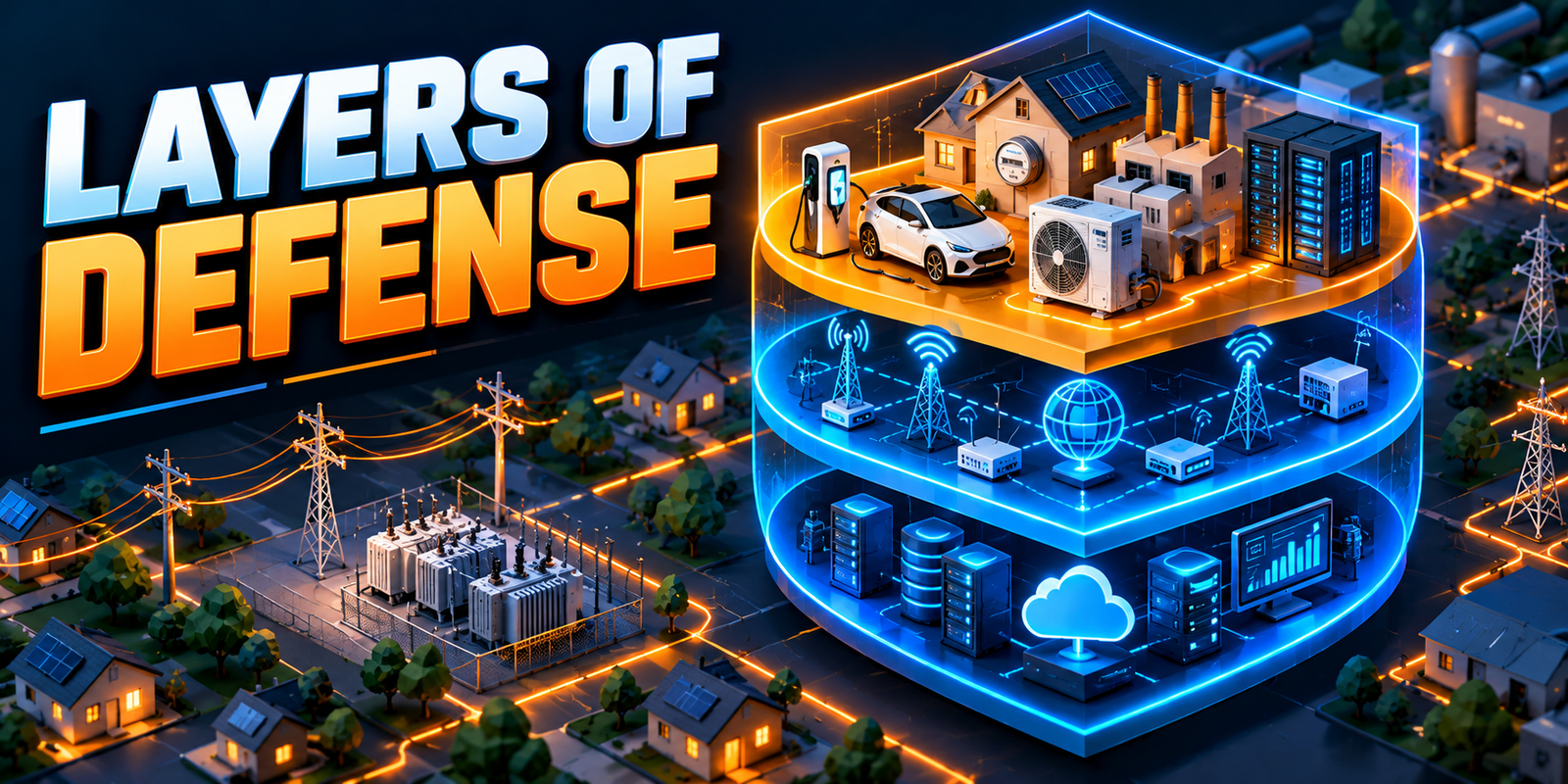
To understand failures, it helps to know how the system works in normal conditions. Electricity moves through several linked stages, and each one depends on the others. Our guide to electricity transmission and distribution covers the full journey in more detail.
- Generation: Power plants produce electricity. Generation must match demand at every moment.
- Transmission: High-voltage lines carry bulk power over long distances.
- Distribution: Medium- and low-voltage networks deliver power to customers.
- Substations: Switching and voltage transformation points where lines meet.
- Transformers: Change voltage between network levels.
- Protection systems: Relays and circuit breakers detect faults and disconnect the affected equipment.
- Control systems: SCADA and control centers let operators monitor and operate the network.
- Loads: Customers consume power, and their demand changes constantly.
These parts interact continuously. Control systems adjust generation and voltage as load changes. Protection stands ready to isolate any fault. The grid is also planned with spare capacity, so that it can survive the loss of a single element. Failures happen when that margin is used up.
Technical Causes of Power Grid Failures
Technical causes are failures of equipment or of the electrical conditions the equipment must handle. For each, the points below explain what happens, why, the possible impact and how utilities reduce the risk.
Transformer failures
- What happens: A transformer develops an internal fault, trips or is removed from service.
- Why: Insulation deteriorates over time through heat, moisture and electrical stress. Overloading, lightning surges and repeated through-faults speed this up.
- Possible impact: Loss of supply to the area it serves, or overload of nearby transformers that pick up its load. Large transformers can take a long time to replace.
- Risk reduction: Oil and dissolved gas analysis, temperature monitoring, loading limits, protection and spare units.
Transmission and distribution line faults
- What happens: A conductor contacts the ground, a tree or another conductor, or an insulator flashes over. This causes a short circuit.
- Why: Lightning, wind, vegetation, bird or animal contact, conductor damage and contamination are common causes.
- Possible impact: The line trips. Many faults on overhead lines are temporary, so automatic reclosing can restore supply quickly. Permanent faults need repair.
- Risk reduction: Vegetation management, surge protection, insulator maintenance, line inspection and reclosing schemes.
Cable failures
- What happens: Underground cable insulation or a joint or termination breaks down and causes a fault.
- Why: Insulation ages, moisture enters, joints are poorly made or cables are damaged by digging or ground movement.
- Possible impact: Outages that can be slow to locate and repair, because the fault is underground.
- Risk reduction: Partial discharge testing, thermal management, route marking, and sound installation practice.
Circuit breaker and protection system problems
- What happens: A breaker fails to open when needed, or a relay does not operate, or operates when it should not.
- Why: Mechanism wear, control power failure, wrong settings, wiring or communication errors, and instrument transformer problems can all contribute.
- Possible impact: If a breaker fails to clear a fault, backup protection trips neighbouring breakers, which enlarges the outage. An unnecessary trip can remove healthy equipment.
- Risk reduction: Regular testing, redundant protection, careful settings management and breaker-failure schemes.
Substation and generator equipment failures
- What happens: Equipment such as busbars, disconnectors, instrument transformers, batteries or generator systems fails.
- Why: Wear, contamination, poor maintenance, control or excitation problems, and mechanical faults.
- Possible impact: The loss of a substation element can cut off several circuits. The sudden loss of a large generator lowers system frequency until reserves respond.
- Risk reduction: Maintenance programmes, redundant supplies, spinning and operating reserves, and monitoring.
Short circuits and overloads
- What happens: A short circuit produces very high current. An overload is a sustained current above an equipment rating.
- Why: Short circuits come from insulation failure or contact between conductors. Overloads come from high demand, lost circuits or poor planning.
- Possible impact: Overloaded lines heat up and sag. Overloaded transformers lose insulation life. Protection may trip equipment to prevent damage.
- Risk reduction: Capacity planning, loading monitoring, load transfer and adequate protection settings.
Voltage and frequency instability
- What happens: Voltage falls or collapses in part of the network, or frequency moves outside its normal range.
- Why: Voltage problems arise when there is too little reactive power support for the load. Frequency problems arise when generation and demand are out of balance.
- Possible impact: Equipment may trip on voltage or frequency limits, and a disturbance can widen.
- Risk reduction: Reactive power support, voltage control equipment, reserves and automatic load shedding schemes as a last defence.
Insulation failure and equipment overheating
- What happens: Insulation breaks down or equipment runs too hot.
- Why: Age, contamination, moisture, high loading and poor cooling.
- Possible impact: Faults, reduced equipment life and unplanned outages.
- Risk reduction: Thermal imaging, condition monitoring, cleaning, cooling maintenance and loading control.
Environmental Causes of Power Grid Failures
Environmental conditions affect equipment directly and can also reduce capacity or make restoration slower. The effects depend on geography and on how the network is built.
| Condition | Main effect on the grid |
|---|---|
| Lightning | Surges and flashovers on lines and equipment, which can cause faults and damage |
| High winds, cyclones and hurricanes | Damage to poles and towers, conductors clashing, and debris contact |
| Severe storms | Combined wind, lightning and rain effects across wide areas |
| Flooding | Water damage to substations, underground cables and control equipment |
| Extreme heat | Lower line and transformer ratings, line sag, and higher demand for cooling |
| Extreme cold and ice | Ice loading on lines, conductor movement and higher heating demand |
| Wildfires | Damage to lines and poles, and smoke or heat that can reduce insulation performance |
| Dust and contamination | Build-up on insulators that can lead to flashover, especially in humid or salty conditions |
| Vegetation | Trees and branches touching or falling on lines |
| Earthquakes and landslides | Physical damage to substations, towers and foundations |
Different parts of the system react differently:
- Transmission lines: Exposed over long distances, so they face lightning, wind, ice and fires.
- Substations: Concentrated equipment is vulnerable to flooding, contamination and ground movement.
- Transformers: Heat reduces their capacity, and floods or surges can damage them.
- Distribution networks: Overhead feeders are often affected by trees and wind, while underground cables are affected by flooding and ground movement.
- Communication systems: Weather can damage communication links, which reduces visibility and control just when they are needed.
Utilities respond with weather monitoring, vegetation management, stronger structures, flood protection, insulator cleaning and selective undergrounding.
Operational Causes of Power Grid Failures
Operational causes relate to how the grid is planned, maintained and run. Good operating practice builds margin into the system, and poor practice removes it.
- Poor load forecasting: If demand is underestimated, reserves and capacity may be too low.
- Incorrect switching: A wrong switching step can cause a fault or overload. Switching procedures and checks are designed to prevent this.
- Human error: Mistakes in operation, maintenance or settings can contribute to an event, and good procedures and training reduce the chance.
- Protection coordination problems: Poorly coordinated settings can cause trips of more equipment than necessary.
- Maintenance failures: Overdue or poor maintenance allows faults to develop unnoticed.
- Insufficient reserves: Without enough spare generation, a sudden loss can lower frequency sharply.
- Voltage management problems: Inadequate reactive power or control settings can lead to low or unstable voltage.
- Frequency management: Failure to keep generation and demand balanced can push frequency out of range.
- Outage management issues: Slow fault location or poor crew coordination prolongs outages.
- Poor system coordination: Neighbouring operators need shared information. Gaps can hide developing problems.
- Inadequate contingency planning: Operators study the loss of key elements in advance. If they do not, a first failure can quickly lead to others.
Operational decisions can therefore increase or reduce reliability. Accurate forecasts, clear procedures, trained staff and regular contingency analysis all keep the grid further from its limits.
Aging Infrastructure and Power Grid Reliability
Many grids contain equipment that has been in service for decades. Age alone does not cause failure, but it raises the probability and often makes failures harder to manage.
How aging shows up
- Aging transformers: Insulation weakens and fault withstand capability falls over time.
- Aging transmission lines: Conductors, hardware and structures can corrode or fatigue.
- Aging substations: Older switchgear, protection and control equipment may be hard to maintain and may lack modern monitoring.
- Insulation deterioration: Cable and equipment insulation loses strength with heat, moisture and stress.
- Corrosion: Steel structures, fittings and enclosures degrade, especially in coastal or industrial areas.
Why it matters
Maintenance becomes more demanding, spare parts can be scarce, and older equipment may have little spare capacity for new loads. Capacity limitations also grow as demand rises. For these reasons, utilities use condition assessment and replacement planning to decide which assets to repair, refurbish or replace first.
What Is a Cascading Power Grid Failure?
A cascading failure is a sequence of dependent failures in which each event stresses other equipment and causes further trips, so a local disturbance grows into a wider outage.
Cascades usually begin with an ordinary fault. They become serious when the system is already stressed or when protection or operator response does not contain the disturbance. A generic sequence looks like this:
Initial fault
A line or piece of equipment is faulted.
Protection response
Relays and breakers isolate the faulted element, as designed.
Load redistribution
Power that flowed through that element shifts to other lines and transformers.
Additional stress
Some of those elements become heavily loaded, or voltage and frequency move out of range.
Additional equipment failures
Overloaded or stressed equipment trips or fails, which shifts load again.
Wider outage
The disturbance spreads until protection and control actions, including load shedding, stabilize the remaining system.
Cascades are uncommon because grids are designed to survive the loss of single elements. Defences include spare capacity, coordinated protection, automatic load shedding and controlled separation of parts of the network.
Transmission vs Distribution Failures
Failures look different on the two networks. For background on how they differ in general, see our comparison of transmission vs distribution networks.
| Feature | Transmission failures | Distribution failures |
|---|---|---|
| Network level | Bulk power network | Local delivery network |
| Typical equipment | Towers, high-voltage lines, power transformers, breakers | Feeders, distribution transformers, reclosers, fuses, cables |
| Voltage level | High and extra-high voltage | Medium and low voltage |
| Failure location | Lines, substations and generation connections | Feeders, local transformers and service lines |
| Common causes | Lightning, storms, equipment failure, protection issues, overloads | Trees, wind, animals, cable faults, transformer overload, vehicle damage |
| Customer impact | Often none if the network has redundancy, but can be wide if it does not hold | Usually a smaller area, but it affects customers directly and more often |
| Detection | Protection relays and SCADA | Protection, SCADA where installed, and increasingly smart meter data |
| Restoration | Rerouting power and returning equipment to service in a controlled sequence | Isolating the fault, switching to backup feeders, then repairing |
Transmission networks are usually meshed, so they can often survive the loss of a line without customer outages. Distribution feeders are mostly radial, so a fault usually interrupts supply downstream until the network is switched. This is why most customer outages originate in distribution, even though transmission events can affect far more people.
Power Grid Failure vs Power Outage
These terms are often used loosely. A power outage is what the customer experiences. A grid failure is a cause or event within the system. The table separates common terms.
| Term | Meaning |
|---|---|
| Power outage | Loss of electricity supply to one or more customers |
| Equipment failure | A component, such as a transformer or cable, stops working |
| Local fault | A short circuit or similar problem on a specific line or device |
| Grid disturbance | A broader change in voltage, frequency or power flow that stresses the system |
| Cascading failure | A chain of dependent failures that spreads through the network |
| Large-scale blackout | A widespread loss of supply, often following a major disturbance or cascade |
Not every equipment failure causes an outage, because redundancy can keep customers supplied. Not every outage is a grid-wide failure either. Most are local and caused by distribution faults.
How Protection Systems Help Prevent Grid Failures
Protection systems limit damage and keep disturbances small. They do not prevent faults. They detect faults and isolate only the faulted equipment.
- Protective relays: Measure current and voltage and decide whether a fault exists.
- Circuit breakers: Open to interrupt fault current when relays send a trip signal.
- Fault detection: Relays use quantities such as overcurrent, impedance or current difference to recognise faults.
- Isolation: Removing only the faulted section keeps the rest of the network in service.
- Protection coordination: Settings are chosen so the device nearest the fault operates first, and others act as backup. This is called selectivity.
- Automatic protection: Fast, automatic operation is needed because faults can damage equipment and affect stability within a fraction of a second.
- System stability: Quick fault clearing helps generators stay in step with each other.
Protection must also be dependable and secure. It must operate when needed, and must not operate when it should not. Testing, redundancy and careful settings management support both.
How SCADA and Real-Time Monitoring Improve Grid Reliability
Operators cannot manage what they cannot see. SCADA and real-time monitoring give them visibility and remote control, which shortens response time.
- SCADA: Supervisory control and data acquisition collects status and measurements and sends commands to remote equipment.
- Sensors: Measure voltage, current, temperature and other conditions on equipment and lines.
- Remote monitoring: Operators can watch equipment status without being on site.
- Substation monitoring: Monitoring of transformers, breakers and batteries helps detect problems early.
- Real-time measurements: Live data shows loading, voltage and power flow as conditions change.
- Alarm systems: Alert operators to abnormal conditions so they can act.
- Fault detection: Event records and measurements help locate faults sooner.
- Operational visibility: A clearer picture of the network reduces the chance of surprises.
This visibility is a core part of grid digitalization, which connects physical equipment with sensing, communication, data and control.
How Smart Grids Help Reduce Power Grid Failures
A smart grid adds two-way communication and more monitoring and control to the electric grid. It helps utilities find and fix problems faster, and sometimes spot them before they cause outages. It does not eliminate failures. Our overview of the modern electric grid describes the wider architecture.
- Smart meters and AMI: Meters can report loss of supply, which helps utilities identify outage areas without waiting for customer calls.
- Sensors: More measurement points reveal loading and voltage conditions on feeders.
- Automated switching: Remote-controlled switches can isolate a faulted section and restore supply to others.
- Distribution automation: Control software coordinates devices on feeders to reduce outage duration.
- Real-time monitoring: Operators see network state more completely.
- Advanced analytics: Data can show developing problems, such as overloaded transformers.
- Fault location: Combined data from relays, sensors and meters narrows the search area for crews.
- Self-healing concepts: Automated fault isolation and service restoration can reduce the number of customers affected by a fault. This works within defined rules and depends on available backup capacity.
Smart grid technology also adds new dependencies on communication networks and software, which must themselves be reliable and secure.
How AI and Predictive Maintenance Can Improve Grid Reliability
Predictive maintenance uses data and models to estimate which equipment needs attention. AI and machine learning can support this by finding patterns in large data sets. They help prioritize and plan. They do not guarantee that a failure will be predicted or prevented.
- Predictive equipment maintenance: Models use condition and operating data to estimate when maintenance is needed.
- Transformer condition monitoring: Temperature, loading and dissolved gas data can indicate developing problems.
- Failure prediction: Models estimate the probability that an asset will fail within a period. Estimates carry uncertainty.
- Anomaly detection: Algorithms flag unusual readings that may point to faults or data errors.
- Load forecasting: Models predict demand to help operators plan reserves and loading.
- Asset health scoring: Combines inspection, test and operating data into a score to support decisions.
- Fault prediction: Some utilities analyse patterns in disturbances to flag lines or feeders at higher risk.
- Maintenance prioritization: Risk-based ranking helps direct limited budgets and crews to the assets that matter most.
AI prediction is not the same as guaranteed failure prevention. Results depend on data quality, model validation and human review. Models can be wrong, particularly for rare events or conditions unlike their training data.
Renewable Energy and Modern Grid Reliability
Renewable generation does not make the grid less reliable by itself. It changes how the grid must be planned and operated.
- Variable generation: Solar and wind output changes with weather, so other resources must balance it.
- Forecasting: Better forecasts of generation and load reduce uncertainty for operators.
- Power quality: Power electronics used by many renewable sources can introduce harmonics and other effects that need to be managed.
- Voltage management: High local generation can raise voltage on distribution feeders.
- Frequency management: Systems with less conventional rotating generation may need other sources of frequency support.
- Grid flexibility: Flexible generation, demand response and storage help absorb variability.
- Energy storage: Batteries can support balancing, voltage and short-term reliability.
- Transmission planning: Renewable sites are often far from load, so new or upgraded lines may be needed.
These are planning and operational challenges, and many grids are managing them successfully. Outcomes depend on investment, market design and technical standards in each region.
Cybersecurity and Power Grid Reliability
As grids add connected devices and software, cybersecurity becomes part of reliability. The aim is defensive: protect systems and keep operating safely if something goes wrong.
- Monitoring: Watch networks and devices for unusual activity.
- Access control: Limit who and what can reach control systems, with the least privilege necessary.
- Network segmentation: Separate operational systems from business networks and from each other, to contain problems.
- Authentication: Use strong, preferably multi-factor, authentication for people and systems.
- Patch management: Apply updates in a controlled way that respects operational constraints.
- Incident response: Plan and practise how to detect, contain and recover from incidents.
- Backup and recovery: Keep protected backups and tested recovery procedures.
- Security monitoring: Collect and review logs to detect problems early.
Many utilities also keep manual or local control options, so operators can run essential functions if digital systems are unavailable.
How Utilities Prevent Power Grid Failures
No single measure prevents failures. Utilities combine many measures, so that a single failure is less likely to occur, and less likely to spread.
- Preventive maintenance: Scheduled inspection, testing and servicing.
- Predictive maintenance: Maintenance guided by condition data.
- Asset monitoring: Continuous measurement of important equipment.
- Vegetation management: Trimming and clearing around overhead lines.
- Weather monitoring: Forecasts and alerts help crews and operators prepare.
- Protection testing: Regular testing and review of relays, breakers and settings.
- Grid automation: Automated switching limits outage size and duration.
- Capacity planning: Ensuring lines and transformers can handle expected demand and the loss of single elements.
- Redundancy: Backup paths, spare equipment and alternative supplies.
- Emergency planning: Response plans, drills and mutual assistance arrangements.
- Workforce training: Skilled staff and clear procedures reduce errors.
- Cybersecurity: Defensive controls for operational and business systems.
- Grid modernization: Upgrading equipment, data and controls over time.
What Happens During a Major Grid Failure?
Every event is different, and utilities follow their own procedures. In general terms, the sequence is as follows.
Fault or disturbance occurs
Something disrupts normal operation, such as a fault or a loss of generation.
Protection systems respond
Relays and breakers act automatically to limit damage.
Faulted equipment is isolated
The affected elements are disconnected, so the remaining system can stabilize.
Operators assess the network
Control center staff review alarms, measurements and equipment status to understand what has happened.
Load and generation are balanced
Operators and automatic controls adjust generation, and sometimes shed load, so supply and demand match again.
Restoration begins
Healthy parts of the network are re-energized in a planned order, and customers are reconnected in stages.
Systems return to normal operation
As repairs finish and margins rebuild, the network is gradually returned to its normal configuration.
Restoration after a widespread event is usually staged, because reconnecting too much load too quickly can cause a new disturbance.
Illustrative Example: How a Grid Failure Can Develop
The following is a generic, fictional example. It does not describe a real incident, and real events differ in detail.
Severe weather
A storm passes through a region, and a transmission line is exposed to high winds and lightning.
Transmission line fault
The line develops a short circuit.
Protection system operates
Relays detect the fault, and breakers open at both ends of the line.
Power flow shifts
The power that used the line redistributes onto neighbouring lines.
Another component becomes overloaded
One of those lines or a transformer is now carrying more than its normal load, on a hot day when its rating is lower.
Operators intervene
Control center staff see the alarm, adjust generation, change switching and, if needed, reduce load in a controlled way.
Affected area is isolated
If the overload cannot be relieved, part of the network is separated, so the rest remains stable.
Restoration begins
Crews repair the damaged line, and affected customers are reconnected in stages.
In this example, the first fault was ordinary. The outage grew only because other parts of the system were close to their limits. That is why margin, coordination and fast operator visibility matter.
Quick Summary: Power Grid Failure Causes
| Cause | Examples | Risk | Prevention or mitigation |
|---|---|---|---|
| Technical | Transformer, cable and breaker failures, short circuits, overloads, protection problems | Local or wider outages, equipment damage | Testing, condition monitoring, redundancy, protection review |
| Environmental | Lightning, wind, flooding, heat, ice, wildfire, vegetation | Line and substation damage, reduced capacity | Weather monitoring, vegetation management, flood protection, stronger structures |
| Operational | Switching errors, poor forecasting, low reserves, weak contingency planning | Instability, avoidable interruptions | Procedures, training, forecasting, contingency analysis |
| Infrastructure | Aging equipment, corrosion, insufficient capacity | Rising failure rates, limited headroom | Asset management, replacement planning, capacity upgrades |
| Systemic or cascading | Chains of dependent trips and overloads | Large-scale outage | Spare capacity, coordinated protection, load shedding schemes, wide-area monitoring |
How Grid Modernization Improves Reliability
Grid modernization is the broader effort to upgrade equipment, data and operating methods. Many of its elements target the failure causes described above. For a closer look at the data side, see our guide to how power grids are becoming digital and data-driven.
- Smart grid and AMI: Better visibility of outages and network conditions.
- Digital substations: Digital communication and monitoring inside substations.
- Sensors: More measurement points on lines, transformers and feeders.
- Automation: Faster fault isolation and restoration.
- Predictive maintenance: Maintenance guided by equipment condition.
- Real-time analytics: Faster detection of abnormal conditions and likely overloads.
- AI and machine learning: Decision support for forecasting, asset health and maintenance priorities.
- Advanced control systems: Better coordination of voltage, power flow and distributed resources.
Modernization also includes stronger physical infrastructure, such as upgraded lines, transformers and protection. Digital tools help most when they are combined with sound equipment and good operating practice.
Conclusion
Power grid failure causes are rarely simple. Technical faults, environmental stress, operational decisions and aging infrastructure can each start an event, and they can combine to make it larger. In most cases, the first failure is ordinary, and it becomes serious only when margins are thin or protection and control do not contain it.
Protection systems and monitoring reduce this risk by isolating faults and giving operators visibility. Modern digital technologies add faster detection, more automation and better maintenance planning, though they do not remove failures completely. Continued grid modernization, with sound maintenance and planning, remains important for future resilience.
Frequently Asked Questions About Power Grid Failures
What causes power grid failures?
Power grid failures are caused by faults and disturbances that the system cannot contain. Common sources include equipment failures, short circuits, overloads, severe weather, operational errors and aging infrastructure. Often several factors combine, and a local failure can spread if nearby equipment is already heavily loaded or protection does not operate as intended.
What are the most common causes of power outages?
Most customer outages start on local distribution networks. Common causes include trees and branches contacting lines, wind and storm damage, lightning, animal contact, cable and transformer faults, and equipment overloads. Planned work also causes outages. Large-scale blackouts are far less common than these local events.
Can weather cause a power grid failure?
Yes, weather is a major cause of power grid failures. Lightning, high winds, ice, flooding, wildfire and extreme heat can damage equipment or reduce its capacity. Weather often acts together with other factors, such as aging equipment or high demand. Utilities respond with forecasting, vegetation management and strengthened or protected assets.
How do equipment failures affect the electrical grid?
Equipment failures remove capacity and can force other equipment to carry more load. A failed transformer or line may cut supply to an area directly, or shift power onto neighbouring equipment. If a protection device fails to operate, backup protection may trip more equipment. Redundancy and maintenance limit the impact.
What is a cascading power grid failure?
A cascading power grid failure is a chain of dependent failures in which each event stresses other equipment and causes further trips. It usually begins with an ordinary fault, followed by load shifting, overloads and more outages. Grids are designed to survive single failures, so cascades are uncommon, and defences include spare capacity and coordinated protection.
How can utilities prevent power grid failures?
Utilities reduce the risk of failure through preventive and predictive maintenance, asset monitoring, vegetation management, protection testing, capacity planning and redundancy. They also use grid automation, emergency planning, workforce training and cybersecurity controls. These measures lower the likelihood and size of failures but cannot eliminate them completely.
How does grid modernization improve reliability?
Grid modernization improves reliability by giving utilities better visibility, faster response and better planning data. Sensors, smart meters, digital substations and automation help detect faults sooner and restore supply faster. Analytics support maintenance decisions. Modernization works best alongside physical upgrades, such as stronger lines and transformers.
Can AI help predict power grid failures?
AI can help estimate which equipment is more likely to fail, by finding patterns in condition and operating data. It supports maintenance prioritization, anomaly detection and forecasting. It cannot guarantee that a failure will be predicted or prevented, and its results depend on data quality, validation and human oversight.

I share real stories, practical ideas and honest perspectives on business, marketing and life. This blog is a space to learn, grow and connect.