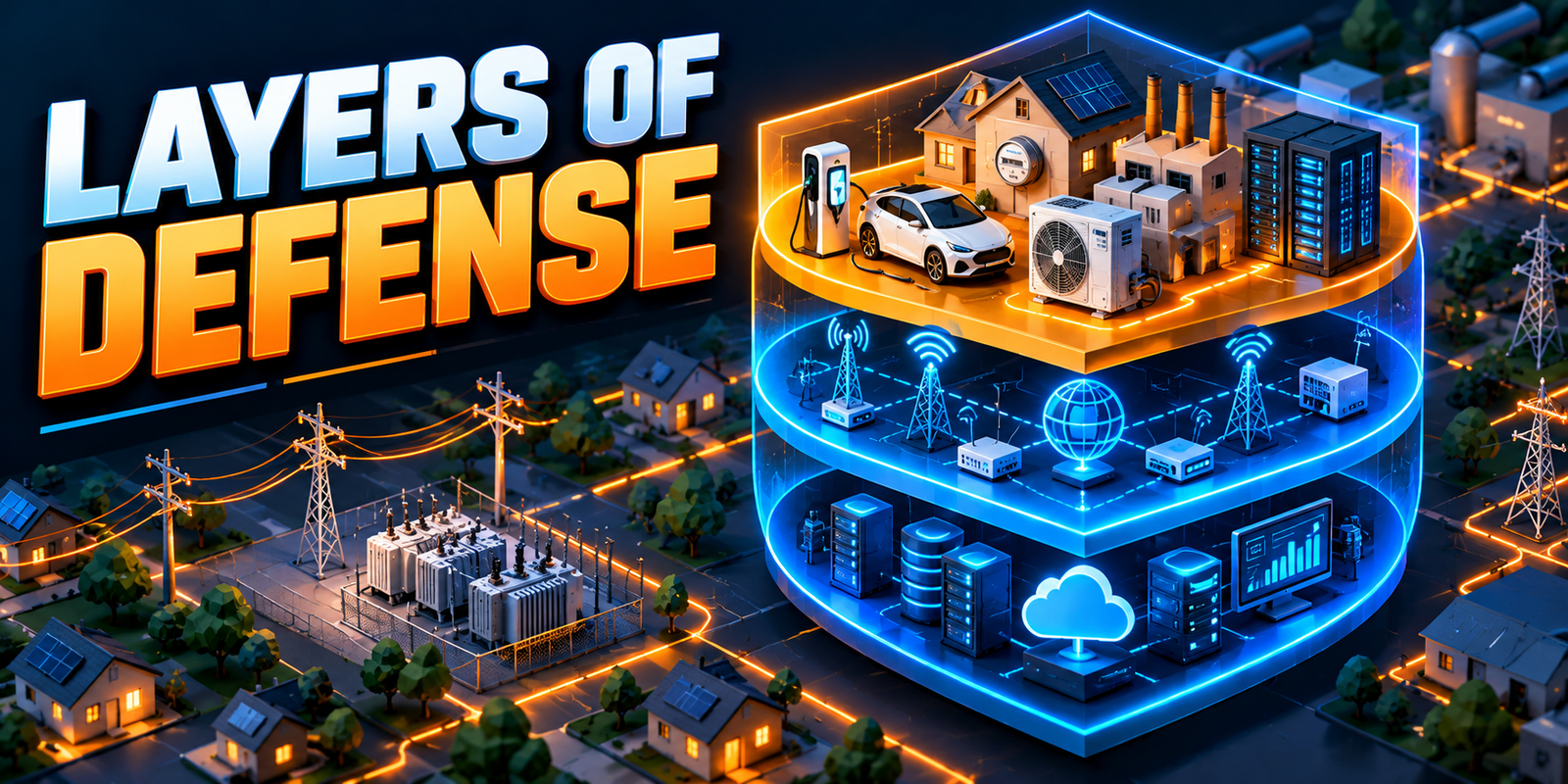
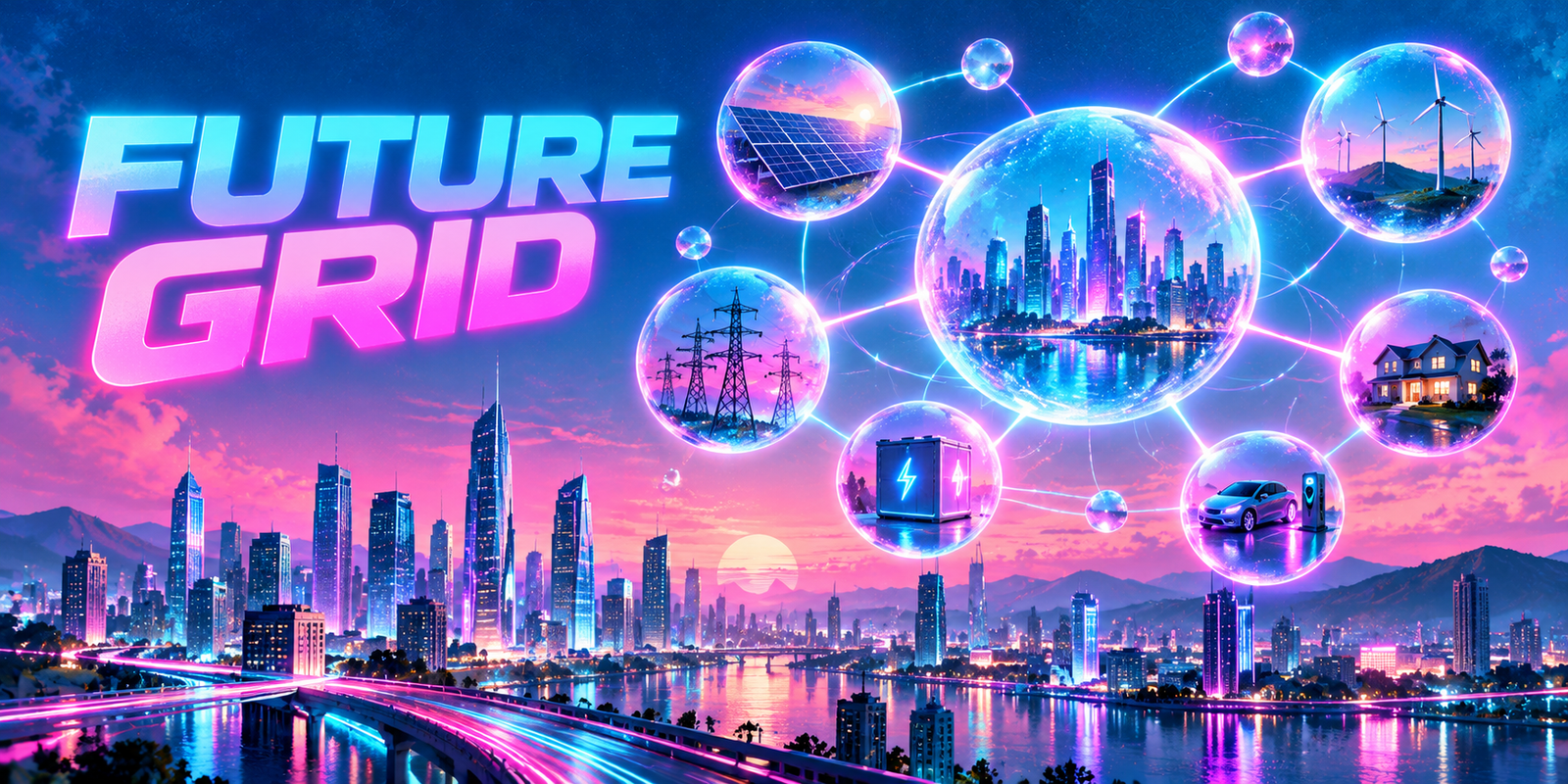
The future smart grid is likely to be more connected, more distributed, more data-driven, more automated, more flexible and more renewable-aware than today’s networks. Instead of a one-way flow from large power plants to passive customers, utilities increasingly manage solar, storage, EV charging and flexible loads that both draw from and feed the network. AI, sensors, advanced communication and automation are the tools that make this complexity manageable.
Each technology changes a specific part of grid operations. Sensors and smart meters improve visibility. Communication networks move data to where it is needed. AI supports forecasting and decision-making. Distributed energy resources (DERs), storage and EVs add both challenges and flexibility. Automation can respond faster than manual operation within defined limits. None of this removes the need for physical infrastructure, protection systems or engineering judgment.
Future development will vary by utility, market, regulation, infrastructure and investment. This article separates what exists today, what is emerging and what remains a possibility. For the basics, read what is a smart grid and key smart grid components.
- AI will increasingly support grid forecasting and decision-making, mostly as recommendations.
- Distributed energy resources will become more important to grid planning and operation.
- Battery storage can provide flexibility, depending on where and how it is used.
- EVs will create both challenges and opportunities for load management.
- IoT and advanced sensors will increase grid visibility.
- Automation can improve operational responsiveness within defined limits.
- Digital twins and advanced analytics may improve planning and asset management.
- Human oversight and cybersecurity will remain important.
What Is the Future of the Smart Grid?
The future smart grid is the next stage of electricity networks: grids that combine physical infrastructure with dense sensing, communication, analytics, distributed resources and more advanced automation.
The evolution can be described as a progression, though stages overlap and utilities do not follow identical paths. A utility may have a digital transmission network but limited distribution visibility, or advanced metering but little automation.
| Grid Stage | Key Characteristics | Main Technologies |
|---|---|---|
| Traditional grid | One-way power flow, limited monitoring, manual operation | Electromechanical equipment, basic SCADA |
| Digital grid | Digital measurement and control at key points | IEDs, RTUs, SCADA, digital relays |
| Smart grid | Two-way communication, wider visibility, some automation | AMI, sensors, DMS, communication networks |
| Distributed, data-driven grid | Many DERs, analytics-based operation | DERMS, data platforms, AI/ML, storage |
| Increasingly automated grid | More automated response within defined limits | Advanced automation, edge computing, digital twins |
For the comparison between old and new networks, see smart grid vs traditional grid.
Why the Grid Is Changing
Several drivers push grids to evolve at once:
- Rising electricity demand from electrification of transport, buildings and industry.
- Renewable energy growth and distributed generation that vary with weather.
- Battery storage and EV adoption, which add controllable and clustered loads.
- Aging infrastructure that needs better condition information.
- Extreme weather risks that raise the value of resilience.
- Data availability and digital technologies that make new analysis possible.
- Decarbonization goals and customer expectations.
- The need for greater flexibility to balance supply and demand.
The pace differs by region and depends on policy, markets and funding. This article avoids numerical forecasts for that reason. The wider shift is described in grid digitalization.
AI and the Future Smart Grid
AI is likely to play a growing role in load forecasting, renewable forecasting, fault detection, predictive maintenance, anomaly detection, asset health assessment, demand response, grid optimization, planning and operator decision support. The detailed applications are covered in artificial intelligence in smart grids.
Four terms are often blurred:
- AI: software that performs tasks needing judgment, such as predicting or classifying.
- Machine learning: a subset of AI that learns patterns from data.
- Analytics: examining data to describe or explain what happened, including non-AI methods.
- Automation: executing actions according to configured logic.
AI provides predictions, classifications, recommendations or optimization in many applications. That does not automatically mean autonomous control. A forecast or an alert is information, and a person or a configured control system decides what to do with it.
Real-Time Data and Future Grid Visibility
Future grid operations depend on better data. Sources include smart meters, grid sensors, IoT devices, IEDs, RTUs, phasor measurement units (PMUs) where deployed, weather data, DER data, EV charging data and storage data. The value chain is:
Sensors
Measure conditions.
Communication
Carries the data.
Data platform
Stores and prepares it.
Analytics and AI
Interpret it.
Decision
An operator or application chooses.
Action
Field equipment responds.
See IoT in smart grids for the device layer, and real-time grid data for why timely data matters.
Distributed Energy Resources and the Future Grid
DERs include rooftop solar, distributed generation, community energy resources, microgrids, battery storage and flexible loads. As they grow, power may flow in both directions on feeders designed for one-way flow.
That raises several challenges:
- Visibility: many resources are not monitored by the utility.
- Coordination: thousands of small resources need consistent signals.
- Forecasting: local generation changes net demand.
- Protection: fault current behavior changes with inverter-based sources.
- Voltage management: local generation can raise or lower voltage.
- Interconnection and data integration: connecting resources and their data takes standards and process.
Future DER architectures will differ by market and utility. Some will use aggregators, some utility-managed programs, and some a mix.
Energy Storage and Grid Flexibility
Battery energy storage can provide flexibility. Potential applications include peak management, renewable integration, energy shifting, frequency support, backup and resilience, and congestion management where applicable. Suitability depends on location, size, market rules and operating design, so claims about specific battery technologies or future costs are avoided here.
| Resource | Role | Consideration |
|---|---|---|
| Generation | Supplies energy | Variable for solar and wind |
| Storage | Shifts energy in time and can provide fast response | Limited duration and capacity |
| Load flexibility | Shifts or reduces demand | Depends on customer participation |
Together these provide balancing options that a rigid grid lacks.
Electric Vehicles and the Future Smart Grid
EVs add charging demand that can be large, clustered and time-dependent. Utilities need load forecasting, charging infrastructure monitoring and distribution planning. Tools include smart charging, managed charging (scheduling or limiting charging by signal or program) and demand flexibility.
Vehicle-to-grid (V2G), where vehicles export energy, is an emerging capability. Deployment depends on vehicles, chargers, standards, market structures and utility programs, and it is currently limited to pilots and specific programs. It should not be treated as universally deployed. EVs are therefore both a challenge, because of added load, and an opportunity, because charging can often be shifted.
Advanced Smart Grid Communication
Future grids will rely on a mix of communication technologies: fiber, cellular, RF mesh, private utility networks, Ethernet, LPWAN, microwave and satellite for specialized cases. What changes is the requirement set:
- Reliability and availability for operational data and control.
- Low latency where required, such as protection and fast automation.
- Scalability for far more connected devices.
- Security across more endpoints.
- Interoperability between old and new equipment.
The technology comparison itself is in smart grid communication networks.
Advanced Sensors and IoT
Future grids may become more observable through smart meters, line sensors, transformer sensors, power-quality sensors, environmental sensors, substation sensors, IoT devices and edge devices. More sensors do not automatically mean better grid intelligence. Data must be:
- Accurate: calibrated and reliable.
- Timely: available when decisions need it.
- Contextual: linked to the right asset and network model.
- Secure: protected from tampering.
- Actionable: tied to a decision or workflow.
Utilities generally gain more by deploying sensors where they answer specific operational questions. For device details, see IoT in smart grids and grid sensors and intelligent monitoring.
Grid Automation and Autonomous Operations
Grid operation can be viewed as a progression:
Manual operations
Crews and local operation.
Remote monitoring
Operators see status.
Automated control
Preconfigured logic acts.
Advanced decision support
Analytics recommend actions.
Increasingly autonomous operations
More decisions executed within defined limits.
Examples include distribution automation, automated switching, fault detection, voltage management, demand response, DER coordination and automated recommendations. The difference matters:
- Automation: executes predefined logic, such as a recloser sequence.
- Autonomous operation: adapts decisions to changing conditions within defined limits, with less direct human input.
Future grids are not expected to operate without humans. Operators, engineers, protection systems, safety procedures and governance remain central. See power system automation for current practice.
Self-Healing Grid Concept
A self-healing grid generally means automated or semi-automated detection and restoration within defined operating frameworks. The cycle is:
Continuous monitoring
Sensors and devices track conditions.
Fault detection and location
The faulted section is identified.
Automated switching
The faulted section is isolated.
Service restoration
Healthy sections are re-energized where possible.
Feedback
New measurements confirm the result.
This is already practiced in fault location, isolation and service restoration (FLISR) schemes. The term should not imply that a grid can resolve every failure on its own. Physical damage still needs crews, and restoration is limited by available alternate paths and capacity.
Digital Substations and Future Substation Automation
Future substations may become more connected and software-driven. Building blocks include IEDs, sensors, digital measurements, IEC 61850 communication, station-level systems, process-level systems, automation, condition monitoring and analytics.
The link to smart-grid operation is data. Digital substations produce rich measurement and event data that analytics can use for asset condition and event analysis, and they connect field intelligence to control centers. Architectures vary between utilities. The design itself is explained in digital substations.
Digital Twins and Grid Simulation
A digital twin is a digital representation or model of a physical asset or system, linked to data from it. Complexity varies widely, from a simple asset model to a network model updated with measurements.
Potential uses include asset monitoring, planning, scenario analysis, training, maintenance, network studies and operational decision support. Not all utilities operate full real-time digital twins today. Many use network models and simulation tools that are updated periodically, and richer twins are an emerging direction that depends on model accuracy and data quality.
Edge Computing and Distributed Intelligence
Some intelligence may move closer to field devices. Edge computing means processing data near where it is created. Benefits can include faster local response, reduced dependence on communication links, data filtering, local analytics and device coordination.
| Aspect | Cloud / Data Center Processing | Edge Processing |
|---|---|---|
| Location | Central | Near the device |
| Strength | Large-scale analysis, historical data | Fast local response, less data sent |
| Dependence on communication | High | Lower |
| Typical use | Forecasting, planning, model training | Local protection support, event filtering |
| Limitation | Latency and bandwidth | Limited computing, harder to manage at scale |
The right architecture depends on the application, and many systems combine both.
AI, IoT, Edge, Communication and Control Together
The future architecture links the technologies in one loop:
Physical grid
Equipment, generation and loads.
Sensors and smart meters
Measure conditions and consumption.
IoT and edge devices
Connect, filter and process locally.
Communication
Carries data and commands.
Data platform
Stores and prepares data.
AI and analytics
Find patterns and forecast.
Prediction and detection
Produce forecasts and alerts.
Decision support
Presents options to operators.
Automation
Executes approved or configured actions.
Field action
Equipment operates.
Feedback
New measurements restart the loop.
Each layer has a distinct role. Sensors and meters supply measurements. IoT and edge devices connect and pre-process them. Communication transports them. The data platform makes them usable. AI and analytics interpret them. Decision support and automation turn insight into action, and feedback shows whether the action worked. A weakness in any layer limits the rest, which is why data quality, communication reliability and security matter as much as the algorithms. See how smart grid technology works for the current-state loop.
Future Grid and Renewable Energy
As variable generation grows, grids may rely more on data, forecasting and flexibility. Relevant tools include solar and wind forecasting, storage, flexible demand, DER coordination, grid balancing and, where needed, curtailment of generation when supply exceeds what the network can absorb. Forecasting helps plan reserves and dispatch, and flexibility handles the difference between forecast and reality. Future renewable shares will depend on policy, resources and network capacity, so no percentages are given here. For wider context, see the electric grid in 2035.
Future Grid and Demand Response
Demand-side flexibility may grow through smart meters, smart appliances, industrial loads, EV charging, building energy systems, flexible loads and time-based programs. Demand response can reduce or shift consumption at peak times and complement storage. Participation is voluntary in most programs, so utilities cannot assume that every customer will take part, and program design, incentives and communication affect results.
Customer and Prosumer Role
A traditional consumer only buys electricity. A prosumer may also generate it, store it and shift demand, and may take part in flexibility programs. This changes the relationship between utilities and customers.
Customer choice, fair incentives, privacy and appropriate program design are important. Detailed usage data can reveal household behavior, so utilities need clear data rules. Participation should be understandable and optional.
Cybersecurity of the Future Smart Grid
More connectivity expands the attack surface, meaning the number of points that could be targeted. Defensive priorities include:
- Device authentication and access control.
- Secure communication and encryption where appropriate.
- Network segmentation between operational and business systems.
- Firmware management and secure updates.
- Monitoring and incident response.
- Vendor security across the supply chain.
- AI and model security, including control over who changes models.
- Data integrity and availability, since wrong or missing data can mislead decisions.
Security needs to be designed in from the start and maintained over the lifecycle of long-lived field equipment.
Interoperability and Standards
Future grids will combine equipment from many vendors and generations, so interoperability is essential. It relies on open standards, protocols, data models, APIs and device interoperability. Examples include IEC 61850 for substation communication and the Common Information Model (CIM) for exchanging network model data.
- Interoperability: different systems exchange and use data without custom work.
- Vendor lock-in: proprietary interfaces make switching or integrating costly.
Complete interoperability is not yet solved. Standards leave options open, implementations differ, and testing is still needed.
Future Smart Grid Workforce
Future teams may need a combination of power systems engineering, electrical engineering, data engineering, AI/ML, cybersecurity, networking, software, asset management and operations skills. Technology will change workflows, but engineering judgment, safety and governance remain important. Training and cross-disciplinary teams help utilities use new tools safely.
Challenges and Limitations
Future smart-grid technology faces real constraints:
- Cost and funding limits.
- Legacy infrastructure that may not connect easily.
- Cybersecurity and interoperability gaps.
- Data quality problems.
- Workforce skills shortages.
- Regulatory requirements and approval processes.
- Technology lifecycle: grid equipment lasts decades, while software and devices change faster.
- Vendor dependencies and system complexity.
- Reliability requirements that limit risk-taking.
- Public and customer acceptance.
Technological capability does not guarantee successful deployment. For why networks fail, see what causes power grid failures.
Current vs Emerging vs Future Technology
Status varies by utility and market. The table is a general guide, and none of these technologies is universal.
| Technology | Current Status | Emerging Direction | Potential Future Role |
|---|---|---|---|
| Smart meters | Deployed in many regions | More grid-edge functions | Richer sensing and customer interaction |
| IoT sensors | Used in targeted deployments | Wider, lower-cost sensing | Broader network visibility |
| AI/ML | Used in forecasting and analytics | Operational decision support | Wider operational assistance with oversight |
| Battery storage | Deployed in many projects | More grid services | Larger role in flexibility |
| EV smart charging | Programs and pilots exist | Utility-integrated charging | Managed charging at greater scale |
| V2G | Pilots and specific programs | Standards and market development | Possible flexibility source where supported |
| Digital twins | Varying maturity | Connection to live data | Planning and operational support |
| Edge computing | Used in some devices | More local analytics | Distributed intelligence |
| Autonomous operations | Limited, defined schemes | Broader supervised automation | Possible for defined tasks, with oversight |
| Distribution automation | Established in many utilities | Coordinated, data-rich schemes | More adaptive feeder operation |
| Digital substations | Deployed in varying forms | More software-driven designs | Closer integration with grid analytics |
Illustrative Future Scenario
Illustrative Future Scenario — not a real utility project.
A distribution network faces a hot summer afternoon with high demand, variable rooftop solar, EV charging and battery storage. A possible sequence:
Smart meters and sensors report current conditions
Loading and voltage readings arrive.
Weather and load data enter forecasting systems
Temperature and recent demand are combined.
AI predicts changing demand
The model expects rising load into the evening.
DER systems provide generation information
Solar output and its variability are reported.
Storage availability is evaluated
State of charge and limits are checked.
EV charging demand is assessed
Expected charging load is estimated.
DMS and utility systems identify potential constraints
A feeder may approach a loading limit.
Operators receive recommendations
Options include storage dispatch or managed charging.
Automated systems perform approved actions where appropriate
Actions stay within configured limits.
New measurements provide feedback
The utility sees whether conditions improved.
Outcomes are not guaranteed. The scenario shows how the layers could cooperate.
How Utilities Can Prepare for the Future Smart Grid
Utilities should prioritize measurable operational outcomes, not technology adoption for its own sake. A practical roadmap:
- Modernize data foundations: consistent, governed, accessible data.
- Improve grid visibility where it supports decisions.
- Strengthen communication infrastructure for reliability and capacity.
- Deploy high-value IoT use cases first.
- Improve interoperability through standards and testing.
- Build AI and analytics capabilities on validated data.
- Integrate DER and storage visibility.
- Prepare for EV growth through monitoring and planning.
- Expand automation carefully, with testing and operator control.
- Strengthen cybersecurity throughout.
- Train the workforce for new tools and workflows.
- Scale through phased modernization after each phase proves value.
What Will the Future Smart Grid Look Like?
In summary, the future smart grid is likely to be more observable, more connected, more distributed, more automated, more flexible, more data-driven, more renewable-aware and more customer-interactive. It will still depend on physical infrastructure, protection systems, engineers, operators, standards, cybersecurity, governance and reliability practices. New technology adds capability to the grid and does not replace those foundations.
Conclusion
Smart-grid technology is evolving rapidly, and the future smart grid will be shaped by how well utilities combine its parts. AI will increasingly support forecasting and decision-making. IoT and sensors will improve visibility. DERs will make power flows more distributed, storage will provide flexibility and EVs will create new demand-management opportunities. Communication and data infrastructure will become more important, automation may become more advanced, and digital twins and edge computing may expand.
Human oversight will remain critical, and cybersecurity and interoperability will stay foundational. Progress will differ across utilities and markets, and no outcome is guaranteed. To go deeper, read how smart grid technology works and why grid modernization depends on real-time visibility.
Frequently Asked Questions About the Future Smart Grid
What is the future of the smart grid?
The future smart grid is likely to be more connected, distributed, data-driven, automated and flexible. It combines physical infrastructure with sensors, communication, analytics, DERs, storage and EVs.
Today’s smart grids already include smart meters, SCADA and distribution automation. Broader AI use, digital twins and more autonomous operation are emerging and will vary by utility.
How will future smart grids work?
They are expected to follow the same loop as today’s grids, with more data and more automation. Sensors, meters and edge devices collect data, communication networks carry it, and AI and analytics interpret it. Operators or configured automation then act, and new measurements provide feedback.
The difference is scale and coordination, with more distributed resources and more local intelligence, still within protection and safety limits.
Why is future smart grid technology important?
Grids face rising demand, variable renewable generation, EV charging, aging assets and extreme weather. Future smart grid technology gives utilities more visibility and flexibility to manage these pressures.
Benefits depend on good data, sound deployment and cybersecurity, and technology alone does not guarantee better reliability.
What are the main technologies shaping future smart grids?
Key technologies include AI and machine learning, IoT and advanced sensors, and communication networks. Others are DERs, battery storage, EV smart charging, distribution automation and digital substations.
Digital twins, edge computing and more autonomous operations are emerging. Cybersecurity and interoperability standards support all of them.
What are the challenges facing future smart grids?
Major challenges include cost, legacy infrastructure, cybersecurity, interoperability and data quality. Workforce skills, regulation, technology lifecycles, vendor dependencies and system complexity also matter.
Utilities typically respond with phased deployment, open standards, strong security and careful validation of new tools.
Where will future smart grid technology be used?
It is expected across transmission, substations, distribution feeders, customer premises and DER sites. Applications include forecasting, automation, storage and EV management, and asset monitoring.
Adoption will differ by utility, region and regulation, so some areas will advance faster than others.
How will AI change future smart grid operations?
AI is likely to improve forecasting, anomaly detection, predictive maintenance and operator decision support. In most applications it produces predictions or recommendations rather than direct control.
Engineers, operators and protection systems remain responsible for safe operation, and AI models need ongoing validation.
How will EVs and battery storage affect future smart grids?
EVs add charging demand that can strain local networks, but smart and managed charging can shift it to better times. Battery storage can provide flexibility for peak management, renewable integration and resilience.
Vehicle-to-grid is emerging and not universally deployed. Results depend on chargers, vehicles, standards, markets and utility programs.

I share real stories, practical ideas and honest perspectives on business, marketing and life. This blog is a space to learn, grow and connect.