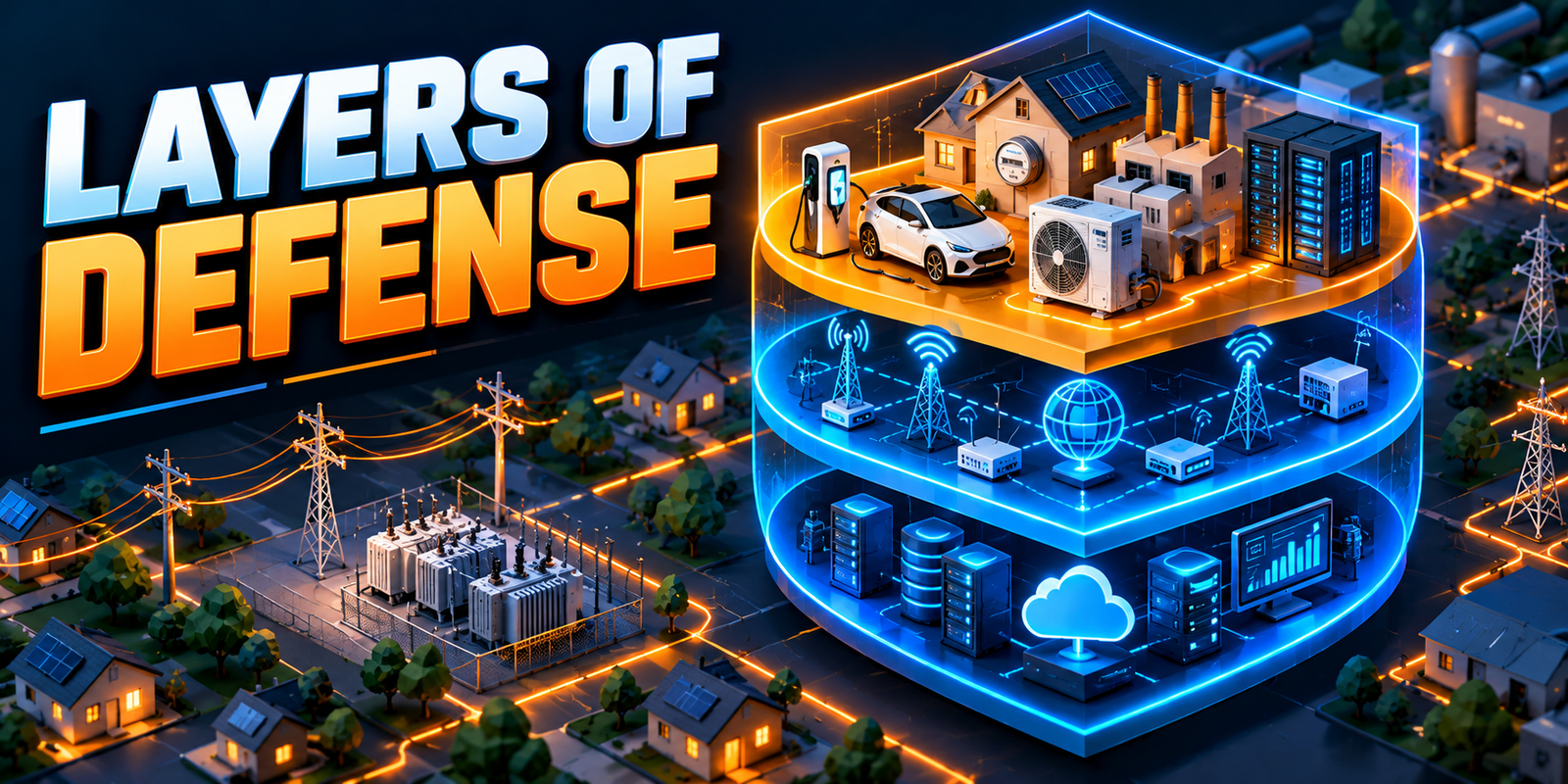
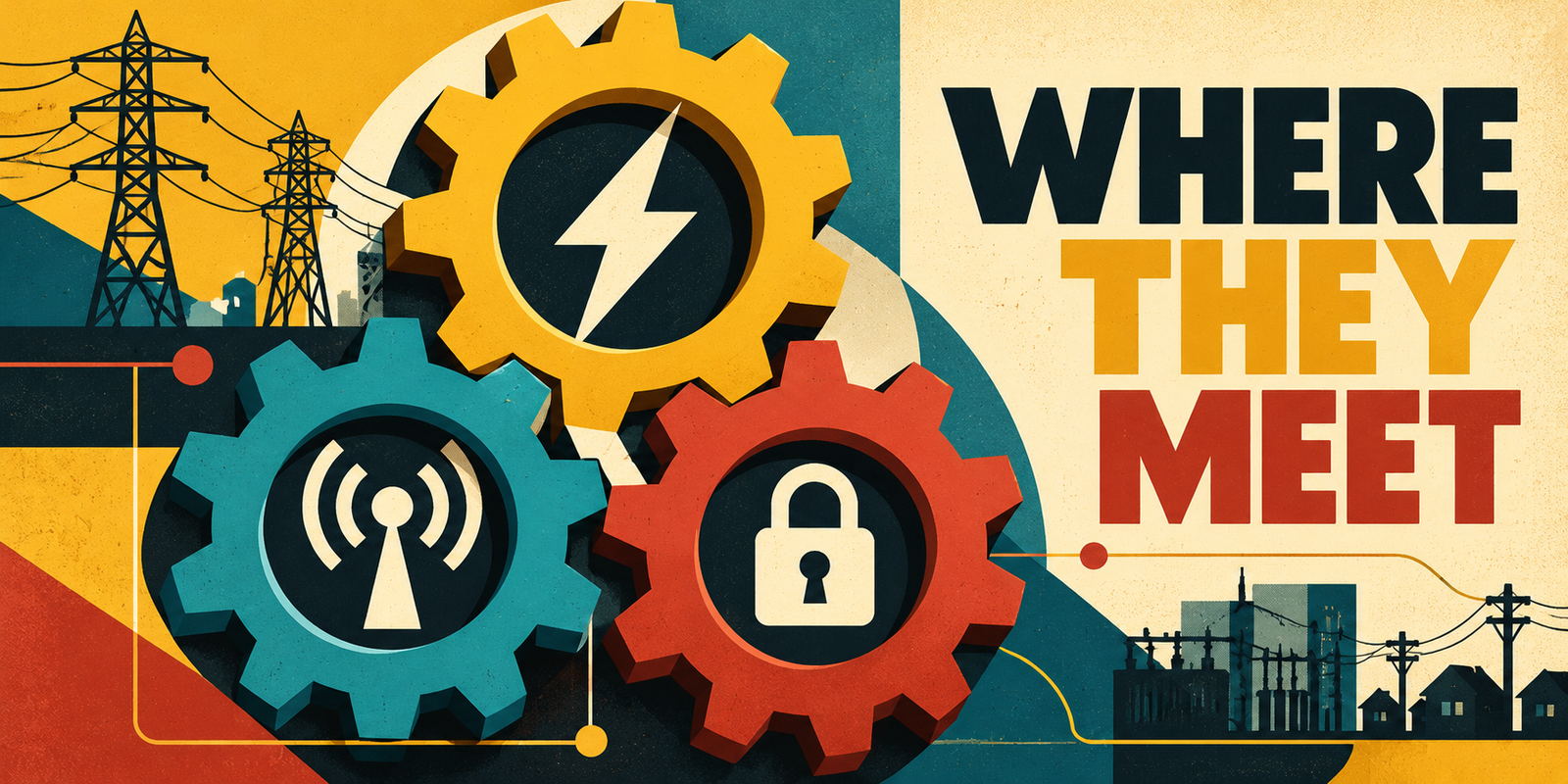
Electrical engineering AI cybersecurity is no longer a set of three separate conversations. Power systems now produce large volumes of data, rely on connected devices and increasingly use analytics to support decisions. Each of these changes brings real benefits, and each adds something that needs protecting. An engineer who understands only the electrical side may miss how a data pipeline can be misled. A data scientist who ignores the physics can build a model that makes no electrical sense. A security professional who lacks plant knowledge may not realize that an apparent attack is actually an ordinary operating event, or the reverse.
This article explains how AI and cybersecurity in electrical engineering fit together in critical infrastructure, with a primary focus on power systems and utility operations. It is written for electrical engineers, engineering students, technology leaders, researchers and industry professionals. It stays defensive and practical, and it separates established practice from emerging applications and from hypothetical examples. It contains no statistics, incident reports or performance claims, because none are needed to explain the concepts. For wider background on how utilities use analytics, see how artificial intelligence is transforming electric utilities.
What Critical Infrastructure Means for Electrical Systems
Critical infrastructure refers to systems and assets that societies depend on so heavily that their disruption would have serious consequences. Many sectors qualify, and electricity underpins most of the others. This article focuses on the electrical and utility part of that picture:
- Generation. Power plants of many types, including renewable and distributed sources connected at different voltage levels.
- Transmission. High-voltage networks and substations that move bulk power. See transmission versus distribution networks.
- Distribution. Lower-voltage feeders, transformers and switchgear that deliver power to customers.
- Utility control systems. SCADA, distribution management, protection and automation systems that monitor and operate the network.
- Metering and customer-side systems. Smart meters, communication networks and data platforms.
- Related energy infrastructure. Storage, electric vehicle charging and large loads such as data centers that connect to the grid.
What defines these systems is that they are physical processes governed by physics and operated continuously. Digital tools support that operation, but they do not replace it.
Understanding the Three Disciplines
Before looking at how they converge, it helps to be clear about what each discipline contributes.
| Discipline | Core contribution | Typical questions it answers |
|---|---|---|
| Electrical engineering | Understanding the physical system: how power flows, how equipment behaves, how protection works and what safe operation requires | What is normal for this equipment? What limits apply? How should the network respond to a fault? |
| Artificial intelligence | Finding patterns in data and supporting forecasting, classification, anomaly detection and prioritization | What will demand look like tomorrow? Which readings are unusual? Which assets might need attention? |
| Cybersecurity | Protecting systems, data and communications from unauthorized access, misuse and disruption, and preparing to recover | Who can reach this system? What changed? How would we detect and respond to a problem? |
Electrical engineering provides ground truth about the system. AI provides analytical capability. Cybersecurity provides assurance that the information and controls the other two depend on can be trusted.
Why Electrical Engineering AI Cybersecurity Convergence Matters
The convergence matters because the technologies depend on each other. Consider how the pieces connect:
- Digital monitoring gives operators and analysts far more visibility, but it also creates data that must be accurate and protected.
- Connected equipment allows remote operation and diagnostics, but each connection is a path that needs to be managed.
- Automated operations can respond faster than people, but they raise the importance of correct inputs and sound safeguards.
- Data-driven decisions can improve planning and maintenance, but they inherit any errors, gaps or manipulation in the underlying data.
In short, every new capability also adds a new thing to secure and a new way for information to be wrong. Treating these as separate problems for separate teams leaves gaps. Treating them together lets organizations get the benefits while managing the risks. See why grid modernization depends on better electricity data and real-time visibility for how visibility underpins these decisions.
Electrical Engineering Foundations
Every AI model and security control in a power system sits on top of electrical engineering. The foundations that matter most include:
- Power systems. Load flow, voltage control, fault levels and stability define what normal operation looks like.
- Protection. Relays detect faults and isolate them quickly. Protection design is conservative and safety-critical.
- Transformers. Their loading, temperature and condition behave according to well-understood physics. See transformer health monitoring.
- Substations and switchgear. The switching and measurement points where much monitoring and control takes place. See digital substations.
- Control systems. Feedback control, regulators and automation schemes that keep quantities within limits.
- Instrumentation. Sensors, transducers and measurement accuracy, which determine how much any downstream analysis can be trusted.
- Operational constraints. Equipment ratings, switching procedures, safety rules and reliability obligations that limit what is acceptable at any moment.
These foundations are what allow an engineer to say whether a reading, an alert or a recommendation is physically plausible. That judgment cannot be automated away.
AI Applications in Critical Infrastructure
Several AI applications are established or developing in utility settings. The important distinction is between analytical support, where a person decides, and systems that directly control equipment. The first is far more common. The second requires extensive validation and is much less widespread.
- Load forecasting. Estimating demand from history, weather and calendar effects to support planning and operations. See AI for electricity load forecasting.
- Equipment condition monitoring. Using sensor and test data to flag assets whose behavior is changing. See AI-based transformer failure prediction.
- Anomaly detection. Highlighting readings or patterns that differ from expected behavior. See AI anomaly detection in electric utilities.
- Fault analysis. Helping engineers classify events and review disturbance records after the fact.
- Decision support. Prioritizing work, summarizing information and presenting options for qualified staff to evaluate.
AI outputs are estimates and leads, not guarantees. They depend on data quality and on conditions resembling those in the training data. It is also worth knowing when simpler methods are enough, as discussed in machine learning versus traditional utility analytics.
Cybersecurity in Power and Utility Systems
Utility cybersecurity covers two broad environments. Information technology (IT) includes business systems, corporate networks and data. Operational technology (OT) includes the systems that monitor and control physical processes, such as SCADA, protection and automation. The priorities differ. IT often emphasizes confidentiality of data, while OT emphasizes availability, safety and the correct operation of equipment, often with long equipment lifetimes and limited ability to patch quickly.
Core defensive practices include:
- Access management. Giving people and systems only the access they need, with strong authentication and review of privileges.
- Network segmentation. Separating networks so that a problem in one zone is less likely to reach critical systems.
- Asset inventories. Knowing what devices exist, where they are, what they run and how they connect. It is hard to protect what is not known.
- Monitoring. Collecting and reviewing logs and network activity to notice unexpected behavior.
- Secure configurations. Hardening devices, removing unnecessary services and controlling changes.
- Incident response. Having tested plans for detecting, containing, recovering from and learning after incidents, including how to operate safely during them.
Security in OT has to be applied carefully. A control that is routine in an office network, such as an aggressive scan or an immediate restart, can disrupt equipment that must keep running. Changes are planned, tested and coordinated with operations.
Smart Grids and Connected Devices
Smart grids illustrate the convergence well because they combine electrical equipment, data and connectivity at scale. Relevant elements include:
- Smart meters and AMI. Meters, communication networks, head-end systems and meter data management. See Advanced Metering Infrastructure.
- Sensors and field devices. Measurement and control equipment on feeders and in substations.
- Communication networks. Fiber, cellular, radio and other links between devices and control centers. See smart grid communication networks.
- SCADA and automation. Telemetry, remote control and operator displays. See power system automation.
- Utility data platforms. Databases and analytics environments that store and process operational and customer data.
Each element creates opportunities for better visibility and each needs to be inventoried, configured securely and monitored. For an overview of how these pieces fit, see what a smart grid is.
AI-Assisted Cybersecurity
Machine learning can support defenders in several ways, though it is an aid rather than a replacement for security practice. Potential uses include:
- Identifying unusual behavior. Learning typical network traffic, device communications or user activity and flagging deviations.
- Prioritizing alerts. Ranking or grouping alerts so analysts spend time where it matters most.
- Supporting investigations. Correlating events across systems and summarizing context for human analysts.
The limitations are significant and should be planned for:
- False positives. Unusual does not mean malicious. Legitimate maintenance, switching or configuration changes can look anomalous.
- Incomplete data. Gaps in logs, limited visibility into OT networks and missing context reduce reliability.
- Adversarial manipulation. A determined actor may try to shape the data or behavior a model sees so that activity appears normal.
- Changing conditions. Seasonal patterns, new equipment and operational changes can cause models to drift and lose accuracy.
Used with those limits in mind, AI-assisted monitoring supports analysts. It does not remove the need for them. For emerging uses and cautions, see also generative AI in electric utilities.
Protecting AI-Enabled Engineering Systems
When AI is part of operations, the AI system itself becomes something to protect. Important areas include:
- Data integrity. Ensuring that training and input data are accurate, complete and not tampered with, since models trust what they are given.
- Model integrity. Controlling who can change models, tracking versions and verifying that deployed models are the approved ones.
- Access control. Restricting access to data, model repositories, pipelines and outputs.
- Software dependencies. Managing the libraries and tools models rely on, including their provenance and updates.
- Model monitoring. Tracking performance over time to detect drift, degradation or unexpected behavior.
- Secure deployment. Keeping analytics environments appropriately separated from control networks and applying change management.
- Human review. Keeping qualified people in the loop for consequential decisions, with clear criteria for when to override or ignore model outputs.
The NIST AI Risk Management Framework, a voluntary framework organized around the functions govern, map, measure and manage, offers one structure for thinking about AI risk. See the official NIST AI Risk Management Framework page, which also notes a concept note for a profile on trustworthy AI in critical infrastructure released in April 2026. As that work is at an early stage, check the current status before relying on it.
Electrical Engineering Context in Cyber Defense
One of the most valuable contributions engineers make to security is knowing what the system should be doing. Network data alone can show that something is unusual. Electrical knowledge helps explain why, and whether it matters.
- Physical processes. Voltage, current, frequency and temperature are linked by physics. A reading that violates those relationships may indicate a sensor fault, a data problem or something more concerning.
- Normal operating ranges. Knowing typical ranges and daily patterns for a given feeder or transformer makes real anomalies easier to spot.
- Equipment behavior. Transformers heat up under load, breakers operate in recognizable sequences and protection schemes respond in defined ways.
- System topology. Knowing how the network is connected shows which measurements should agree and which events should be related.
This context helps distinguish operational faults from possible cyber incidents. A sudden change in a reading might be a failing sensor, a switching operation, a weather effect, a communication fault or a security event. The engineer narrows the possibilities, and the security specialist checks logs and access records to confirm or rule out a cyber cause. Neither conclusion should be assumed in advance.
Common Risk Scenarios
The examples below are high-level and intended for understanding and defense. They are illustrative categories, not accounts of real incidents.
| Scenario | Why it matters | Defensive considerations |
|---|---|---|
| Compromised credentials | Valid accounts can give access to systems that normally require authorization | Strong authentication, least privilege, separate administrative accounts, review of access and login monitoring |
| Unauthorized configuration change | Altered settings on a device could affect operation or hide problems | Change management, configuration baselines, alerts on unexpected changes and regular comparison with approved settings |
| Misleading sensor data | Incorrect measurements can cause wrong decisions by people or automated systems | Cross-checking related measurements, plausibility checks based on physics, redundancy and data integrity controls |
| Disrupted communications | Loss of data or control links reduces visibility and remote operation | Redundant paths, defined local and manual fallback procedures, monitoring of link health |
| Compromised monitoring system | A monitoring or analytics platform could show a false picture or expose data | Segmentation, hardening, independent verification and protection of the platforms that people rely on to see the system |
In each case, the defensive value comes from layered controls and from engineers who can recognize when the physical picture and the digital picture do not agree.
Defense-in-Depth Architecture
Defense in depth means using several independent layers of protection so that failure of one does not expose everything. No single tool can guarantee security, and any claim that one product removes the risk should be treated with caution. A layered approach covers:
| Layer | Examples of safeguards |
|---|---|
| Devices | Secure configurations, firmware management, removal of unused services, physical protection |
| Networks | Segmentation, controlled boundaries between IT and OT, restricted remote access, monitoring |
| Applications | Patching where feasible, authentication, logging, secure development and supplier management |
| Data | Access control, integrity checks, encryption where appropriate, backup and recovery |
| AI models | Version control, validation, drift monitoring, access restrictions and review of outputs |
| Operations and people | Procedures, training, incident response plans, drills and clear authority to act |
The layers also include physical and electrical safeguards, such as protection schemes and manual operating capability, that do not depend on digital systems at all. Retaining those independent safeguards is a central part of resilient design.
Reliability, Safety and Resilience
For utilities, cybersecurity is not an end in itself. It supports reliable service and safe operation. The relationships are worth stating plainly:
- Service continuity. Security measures should protect, and must not unnecessarily endanger, the continuous operation of the network.
- Physical safety. Control actions affect people and equipment, so any change to security or automation is weighed against safety.
- Incident recovery. Backups, manual operating procedures and tested recovery plans determine how quickly normal operation can be restored.
- Operational reliability. Security and reliability goals usually reinforce each other, though trade-offs exist and require engineering judgment. See electric grid reliability for the underlying concepts.
Resilience is about continuing to operate acceptably, and recovering well, when something goes wrong, whether the cause is weather, equipment failure, human error or a cyber event.
Governance and Standards
Good technical controls need governance around them. Typical elements include risk assessment, access policies, incident response planning, clear documentation and regular review. Several frameworks and standards are commonly referenced:
- NIST SP 800-82 Revision 3, Guide to Operational Technology Security. Published in September 2023, it gives guidance on securing OT while addressing performance, reliability and safety requirements. See the official NIST publication page.
- NIST AI Risk Management Framework. A voluntary framework for managing risks of AI systems, mentioned above.
- The ISA/IEC 62443 series. Standards addressing the security of industrial automation and control systems, relevant to many OT environments.
- NERC CIP. Cybersecurity reliability standards that apply to parts of the bulk electric system in North America.
Requirements differ by country, region and asset type, and they are revised over time. This article does not state specific compliance obligations. Organizations should consult the current official texts and their regulators to determine what applies to them.
Team Collaboration
The convergence is a team activity. Each group sees a different part of the system:
- Electrical engineers explain the physical system, normal behavior and safety constraints.
- OT specialists know the control systems, protocols, devices and their operating limits.
- Cybersecurity professionals assess threats, design controls and lead detection and response.
- Data scientists build and evaluate models and need domain input to avoid misleading results.
- Software engineers develop, integrate and maintain applications and data pipelines.
- Utility operators run the network in real time and are the main consumers of alerts and analysis.
Shared vocabulary, regular joint exercises and clear escalation paths do more to improve collaboration than any single tool. Operators should be involved early so that alerts are useful and actionable.
Skills Required for the Converged Field
No one person needs to master everything, but practitioners benefit from a broad base and depth in at least one area:
- Electrical fundamentals. Power systems, protection, transformers, control and instrumentation.
- Data literacy. Working with time-series data, checking quality and interpreting results critically.
- AI and machine learning basics. Understanding training and testing, overfitting, drift and when a simple method is enough.
- Cybersecurity principles. Access control, segmentation, monitoring, vulnerability management and incident response.
- Networking. How devices communicate, including common industrial and utility protocols.
- Risk analysis. Identifying what could go wrong, how likely and how severe, and what to do about it.
- Communication. Explaining technical issues clearly to people in other disciplines.
- Responsible engineering judgment. Knowing the limits of tools and keeping safety and reliability first.
Tools and Technologies
Utilities use many different combinations of technology, and no stack is universal. It is more useful to think in categories than to assume particular products.
| Category | Purpose | Examples and notes |
|---|---|---|
| Power system simulation | Studying normal and abnormal network behavior and testing scenarios | Open tools such as pandapower or OpenDSS for learning; commercial packages vary by employer |
| Monitoring and logging | Collecting and reviewing events from devices, servers and applications | Log management and security monitoring platforms, chosen to suit OT constraints |
| Network analysis | Understanding which devices communicate and how | Passive network monitoring and packet analysis, used carefully in OT environments |
| Data analytics | Cleaning, exploring and modeling operational data | Python and its data-analysis libraries, SQL and visualization tools |
| Model evaluation | Testing accuracy, stability and behavior of AI models over time | Validation against baselines, drift tracking and documented acceptance criteria |
The examples are illustrative and do not imply that every utility uses them. Tool choice follows the problem, the operating environment and the organization existing systems.
A Practical Defensive Workflow
The following high-level sequence shows how the disciplines combine in day-to-day work. It is a general pattern and should be adapted to each organization and system.
- Establish an asset baseline. Build and maintain an inventory of devices, software, connections and owners.
- Understand expected behavior. Document normal electrical ranges, operating patterns, communication flows and typical maintenance activity.
- Collect appropriate data. Gather the logs, measurements and network information needed, with attention to quality, time synchronization and the limits of what can be collected safely.
- Detect anomalies. Use rules, statistics and, where suitable, machine learning to highlight deviations from the baseline.
- Validate alerts. Combine electrical context, data checks and security logs to decide whether a deviation is an operational event, a data problem or a possible security incident.
- Escalate incidents. Follow defined procedures, involving operations, security and management as needed, and prioritize safe operation.
- Review outcomes. Record what was found, update baselines, tune detection and fix gaps in data, tools or procedures.
Hypothetical Case Study: An Unusual Transformer-Monitoring Pattern
This is a hypothetical scenario for illustration. It is not an actual incident, and it contains no real measurements or results.
Imagine a utility with online monitoring on a group of substation transformers. An analyst notices that the temperature trend for one unit looks different from similar units under similar loading. No one yet knows why. The utility convenes three perspectives.
The electrical engineer assesses the physical behavior
The engineer asks whether the pattern is physically plausible. Does temperature move sensibly with loading and ambient conditions? Has the cooling system changed state? Has the unit been switched, re-tapped or operating under unusual loading? The engineer also compares the unit with its neighbors and with its own history, and considers a failing sensor as a possibility. For background on these indicators, see transformer health monitoring.
The AI analyst evaluates the data pattern
The analyst checks data quality first: timestamps, gaps, calibration records and recent changes to data processing. The analyst then compares the pattern with a simple baseline and with any anomaly detection output, treating the result as a lead and not a diagnosis. The analyst also checks whether the model might have drifted or whether this operating condition was absent from its training data.
The cybersecurity specialist checks relevant system events
The specialist reviews whether anything changed in the monitoring system or its network: configuration changes, new accounts or access, unusual communication, firmware updates or maintenance activity. The aim is to confirm or rule out a cyber explanation, not to assume one.
Combining the results
The team compares findings. If the physical behavior, the data and the system logs all point to a sensor fault or a loading change, the response is maintenance or further electrical testing under standard procedures. If the logs show unexpected changes that cannot be explained, the team escalates under the incident response plan while operations maintain safe service. In either case, engineers decide on any physical inspection or testing, and the outcome is documented so baselines and detection can be improved.
Implementation Challenges
- Legacy infrastructure. Older equipment may lack modern security features or logging and may be difficult to update.
- Interoperability. Equipment and software from different suppliers and eras do not always work together smoothly. See smart grid deployment challenges.
- Data quality. Missing, mistimed or inaccurate data weakens both analytics and security monitoring.
- Limited visibility. Some OT networks have little monitoring, so a baseline may be incomplete.
- Skills gaps. Few people have deep knowledge of power systems, data science and security at once, which makes collaboration essential.
- False alarms. Too many low-value alerts overwhelm analysts and erode trust in the tools.
- Privacy. Customer and operational data must be handled lawfully and with appropriate minimization and access control.
- Cost. Monitoring, segmentation and skills development require sustained investment.
- Operational constraints. Outage windows, safety rules and reliability obligations limit when and how changes can be made.
Learning Roadmap and Career Opportunities
Students and working professionals can build interdisciplinary skills step by step. This roadmap promises no particular outcome, and requirements vary by employer and region.
- Strengthen electrical fundamentals. Power systems, protection, transformers and control.
- Learn data and programming basics. Python, SQL, statistics and visualization applied to electrical data.
- Study how smart grids work. Metering, communications, SCADA and data flows.
- Add cybersecurity foundations. Networking, IT versus OT, access control, segmentation and incident response.
- Learn AI and machine learning fundamentals. Concepts, evaluation and limitations, ideally through utility-style data.
- Build practical projects. For example, a monitoring dashboard on simulated data, a documented threat model for a simplified substation network, or a forecasting model compared against a baseline.
- Seek supervised experience. Labs, research, internships and mentoring, always within employer safety and security rules.
- Keep learning. Follow standards and practice as they develop.
Practice in security topics should use isolated, simulated environments and never live infrastructure. For related reading, see smart grid communication networks for the networks you would be defending, and the guide to future smart grid technology for where the field may be heading. Roles that blend these areas exist in utilities, suppliers, consultancies and research, but titles and requirements differ widely.
Practical Checklist for AI-Supported Monitoring and Security
Organizations considering AI-supported monitoring or security in critical electrical infrastructure may find these questions useful.
- Do we have a current inventory of devices, software and network connections?
- Have we documented normal electrical and communication behavior to compare against?
- Is the data we plan to use accurate, time-synchronized and protected against tampering?
- Is the AI system advisory, or can it affect control? What approvals and safeguards apply?
- How will we validate the model, and how will we detect drift or degradation?
- Who is responsible for reviewing alerts, and what is the escalation path?
- How do we handle false positives and avoid alert fatigue?
- Are electrical engineers, operators, security staff and data scientists all involved?
- Can the network operate safely if the monitoring or analytics system is unavailable or wrong?
- Have we assessed supplier and software dependency risk?
- Are privacy, data governance and regulatory requirements understood and documented?
- Have we tested incident response and recovery, including manual operation?
Future Outlook
Several developments may shape how these disciplines work together. All are subject to technical and operational limits, and the pace will vary between utilities and regions.
- AI-supported operations. Analytics is likely to take on more decision-support tasks, with human oversight remaining central for consequential actions.
- Smarter monitoring. More sensors and better data processing may improve visibility, provided data quality and security keep pace.
- Connected infrastructure. Growth in distributed energy resources, storage and flexible loads will add more devices and interfaces to protect.
- Security practice. Approaches such as stronger segmentation, tighter access control and monitoring tailored to OT are likely to continue developing.
- AI governance. Guidance for AI in critical infrastructure is still being developed, so practices will evolve.
It would be a mistake to assume that any of these developments removes the need for engineering judgment or that new tools eliminate risk. For related outlooks, see future smart grid technology.
Conclusion: Bringing Electrical Engineering, AI and Cybersecurity Together
Electrical engineering AI cybersecurity work comes down to a simple idea: each discipline covers what the others cannot. Electrical engineering explains how the physical system should behave and what safe operation requires. AI helps people make sense of large amounts of data, within the limits of its models. Cybersecurity protects the systems, data and models those capabilities depend on, and prepares organizations to recover when something goes wrong. Together they support reliable and resilient critical infrastructure, whereas any one of them alone leaves blind spots. The practical path forward is to build cross-disciplinary teams, keep human judgment and independent safeguards in place, validate tools honestly and keep learning as technology and standards change.
Frequently Asked Questions About Electrical Engineering, AI and Cybersecurity
What is electrical engineering, AI and cybersecurity convergence?
It is the growing overlap between the engineering of power systems, the use of AI and data analytics to support operations, and the cybersecurity needed to protect connected infrastructure. As utilities add sensors, communications and analytics, these fields increasingly depend on one another and are best handled together.
How do electrical engineering, AI and cybersecurity work together?
Electrical engineers define normal physical behavior and safe operating limits, AI analysts look for patterns and unusual behavior in the data, and security specialists protect the systems and check events and access. When a monitoring alert appears, the three perspectives help decide whether it is an equipment fault, a data issue or a possible security event.
Why is the convergence of electrical engineering, AI and cybersecurity important?
Modern power systems rely on connected devices and data-driven decisions, so the accuracy and security of that information directly affect reliability and safety. Combining the disciplines helps utilities gain the benefits of analytics and automation while managing the new risks they introduce.
What are the main components of electrical engineering, AI and cybersecurity?
The main components are power system and protection knowledge, instrumentation and control systems, data pipelines and machine learning models, IT and OT security controls, network segmentation and monitoring, governance and incident response, and the collaboration between engineers, data scientists, security staff and operators.
What are the challenges of combining electrical engineering, AI and cybersecurity?
Challenges include legacy equipment, interoperability, poor or incomplete data, limited visibility in OT networks, skills gaps, false alarms, privacy obligations, cost and operational constraints. Models can also drift or be misled, so human review and independent safeguards remain necessary.
Where is electrical engineering, AI and cybersecurity used?
It is used in electric utilities, transmission and distribution operations, substations, smart metering and AMI, SCADA and control centers, renewable and storage integration, asset monitoring and in related critical infrastructure that depends on electricity. The specific tools and practices differ between organizations and regions.

I share real stories, practical ideas and honest perspectives on business, marketing and life. This blog is a space to learn, grow and connect.