
Smart grid careers sit where electrical engineering meets data, communication networks and software. A smart grid adds sensing, two-way communication, automation and analytics to the electricity network, so utilities can see what is happening on the system and respond with more information than before. For engineers, this creates work that spans power systems, metering, control, data analysis, cybersecurity and utility software, rather than a single narrow job title.
This guide explains how to build a career in smart grid technology. It covers what a smart grid includes, the main technical domains, typical roles, the skills and tools worth learning, portfolio projects, ways to gain experience and how to choose a direction. It is written for electrical engineers, engineering students, technology leaders, researchers and industry professionals. It does not quote salary figures, hiring forecasts or employer requirements, because these vary by country, utility and role. Where a topic is established industry practice the article says so, and where it is still emerging it says that too. For the technical background, see what a smart grid is and how its architecture works.
What a Smart Grid Includes
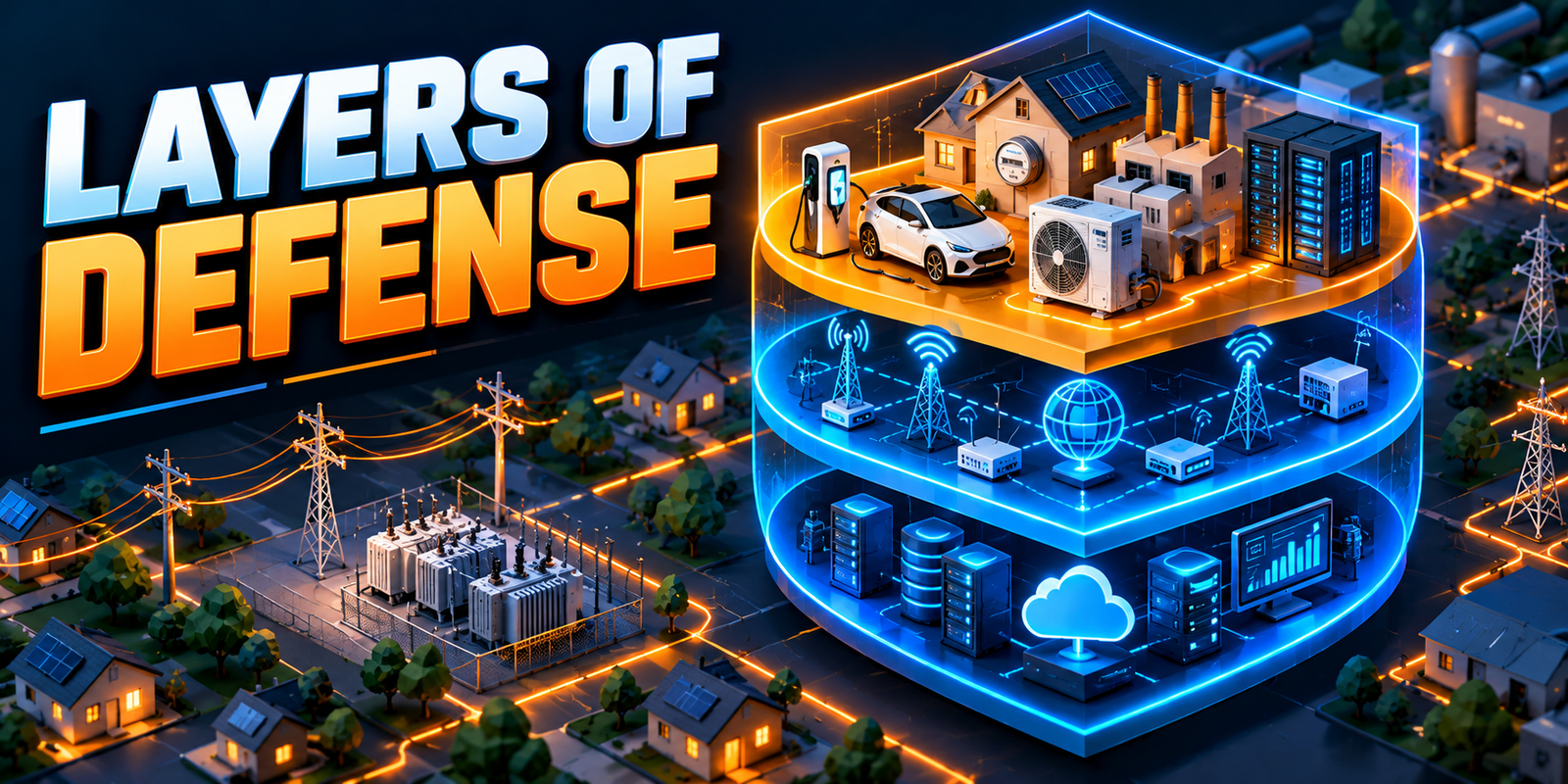
A smart grid is not one product. It is a set of connected technologies layered onto power infrastructure. Understanding these layers helps you see where different careers fit. For a detailed breakdown, see the key components of a smart grid and how smart grid technology works from field devices to control systems.
- Grid monitoring. Sensors, intelligent electronic devices and measurement equipment report voltage, current, equipment status and events from substations and feeders.
- Communication networks. Fiber, cellular, radio mesh and other links carry data between field devices, substations and control centers. See smart grid communication networks.
- Smart meters. Meters record consumption at intervals and report events, forming the customer-facing edge of the system.
- Automation and control systems. SCADA, distribution management and field automation let operators monitor and operate equipment remotely and, in some cases, automate switching.
- Data platforms. Databases, meter data management and analytics environments store and process the information that devices produce.
- Distributed energy resources. Rooftop solar, batteries, electric vehicle chargers and flexible loads connect at distribution level and change how power flows.
Each layer needs people who understand both the engineering and the technology. That is why smart grid work draws on several disciplines at once.
Why Smart Grid Careers Matter
Smart grid careers matter because the technical problems behind them are growing in importance, not because of any guaranteed job outcome. Several developments shape the work engineers do:
- Grid modernization. Utilities are adding digital monitoring and automation to networks built decades ago. See why grid modernization depends on better electricity data.
- Reliability needs. Customers and regulators expect fewer and shorter interruptions, which increases the value of fast fault location, outage detection and automated restoration.
- Renewable energy integration. Variable generation and generation connected at distribution level make network behavior harder to predict and manage.
- Electrification. Electric vehicles, heat pumps and electrified industry add new load patterns that planners and operators must understand.
- Data-driven operations. More measurements make it possible to forecast demand, detect abnormal behavior and prioritize maintenance, provided the data is trustworthy.
The scale and pace of these changes differ between utilities and regions, so any individual career path will too. The sensible way to think about the field is as a growing set of technical problems that need people with solid electrical knowledge and complementary digital skills.
Major Smart Grid Career Domains
Smart grid careers are best understood as domains rather than job titles. Most engineers work mainly in one domain while understanding its neighbors.
| Domain | What the work involves | Typical foundations |
|---|---|---|
| Power systems | Network studies, planning, operations support and analysis of how the grid behaves under normal and abnormal conditions | Power flow, short circuit, stability, protection basics |
| Distribution automation | Remote switching, fault location and restoration schemes, voltage and reactive power control on distribution feeders | Distribution systems, protection, control, communications |
| Advanced Metering Infrastructure (AMI) | Smart meters, meter communication, head-end and meter data management systems and the data they supply. See AMI architecture and data flow | Metering, networking, databases, data quality |
| SCADA and control systems | Telemetry, remote control, alarms, operator displays and integration with field devices. See power system automation | Control systems, industrial protocols, instrumentation |
| Grid analytics | Forecasting, anomaly detection, asset analytics and operational reporting using utility data | Statistics, programming, time-series data, domain knowledge |
| Cybersecurity | Protecting connected devices, networks and control systems in IT and operational technology environments | Networking, security principles, control system architecture |
| Renewable energy integration | Connecting solar, wind and storage to the network, interconnection studies and managing variable output | Power electronics, grid codes, forecasting, network studies |
| Energy storage | Battery systems, their control and their role in network support and flexibility | Power electronics, battery fundamentals, control |
| Utility software | Applications that support operations, outage management, asset management and data integration | Software engineering, databases, system integration |
Smart Grid Career Roles and Responsibilities
Job titles and responsibilities vary considerably between employers. A role called grid engineer at one utility may be split into three narrower roles at another, and the same title can mean different things in different countries. The roles below are common patterns, not fixed definitions.
| Role | Typical focus | Skills commonly used |
|---|---|---|
| Power systems engineer | Network studies, planning, analysis of operating conditions and support for new connections | Power system analysis, simulation software, engineering judgment |
| Smart meter or AMI engineer | Meter deployment, communication performance, head-end and meter data system support, data validation | Metering, networking, databases, troubleshooting |
| SCADA or automation engineer | Telemetry, control logic, point lists, commissioning and integration of field devices | Control systems, industrial protocols, testing and documentation |
| Grid data analyst | Preparing and analyzing meter, SCADA and asset data to answer operational and planning questions | Python or similar, SQL, statistics, visualization |
| Utility cybersecurity specialist | Securing IT and operational technology environments, monitoring, access control and incident preparation | Network security, OT architecture, risk assessment |
| Protection and control engineer | Protection schemes, settings, relay testing and substation automation | Protection principles, relay platforms, communications standards |
| Renewable integration engineer | Interconnection studies, grid code compliance and managing the effect of solar, wind and storage on the network | Power electronics, network studies, forecasting |
Because boundaries blur, it is common to move between these roles or to hold responsibilities from several of them. Reading actual job descriptions from employers you are interested in is the most reliable way to see what a title means in practice.
Electrical Engineering Fundamentals for Smart Grid Careers
Digital skills are valuable, but they sit on top of electrical fundamentals. A data model that ignores how transformers, feeders and protection actually behave will produce confident but wrong answers. The topics that stay important include:
- Power systems. Generation, transmission and distribution, load flow, fault levels and voltage control. See transmission versus distribution networks.
- Electrical networks and circuit analysis. Three-phase systems, per-unit analysis and symmetrical components.
- Transformers. Ratings, loading limits and condition. See transformer health monitoring.
- Protection. How faults are detected, isolated and coordinated, which also underpins most distribution automation.
- Power quality. Voltage variations, harmonics and flicker, increasingly relevant as power electronics spread.
- Distribution planning. Capacity, voltage and reliability assessment for feeders and substations.
- Control principles. Feedback, stability and the behavior of regulators and converters.
These fundamentals let you judge whether a measurement is plausible, whether a model result makes physical sense and whether an automated recommendation could be unsafe.
Digital and Data Skills
Most smart grid roles involve data in some form. The most transferable skills are:
- Data analysis. Cleaning, joining and summarizing measurements, and checking that results are reasonable.
- Statistics. Distributions, uncertainty, sampling, correlation versus causation and basic hypothesis testing.
- Time-series data. Utility data is mostly time series, so trends, seasonality, missing intervals, time zones and daylight saving changes all matter. See why smart meter data quality matters.
- Databases. SQL for querying relational data, and an awareness of how time-series and meter data are stored. See how utilities store smart meter data.
- Visualization. Clear charts and dashboards that help engineers and operators interpret data.
- Basic programming. Enough scripting, usually in Python, to automate analysis and make work reproducible.
The aim is working competence applied to electrical problems, not necessarily becoming a professional software developer.
AI and Machine Learning in Smart Grids
Artificial intelligence and machine learning are application areas within smart grid work, not a guaranteed route to better results. They are useful where there is enough good data and a clear question. Common areas include:
- Load forecasting. Estimating future demand from history, weather and calendar effects. This is among the more established uses. See AI for electricity load forecasting.
- Anomaly detection. Flagging unusual meter, sensor or equipment behavior for human review. See AI-based anomaly detection for smart meter data.
- Predictive maintenance. Using condition data to estimate which assets may need attention. See AI-based predictive maintenance for utility assets.
- Operational analytics. Summarizing and prioritizing information to support operators, planners and maintenance teams. See artificial intelligence in smart grids.
Outputs from these methods are leads and estimates that engineers validate, not conclusions. A model can flag a transformer or meter as unusual without being able to explain why, and a flag is not a confirmed fault. It also helps to know when simpler statistical methods are enough, as discussed in machine learning versus traditional utility analytics. Emerging uses, such as learning-based control of live equipment, are far less common and require thorough validation before any operational use.
Communication Protocols and Integration
Smart grid systems only work if devices and applications can exchange data reliably. Engineers do not need to memorize every protocol, but they should understand the concepts: interoperability (systems from different suppliers working together), telemetry (measurements sent from the field to a central system), device integration and the networks that carry the data.
Several standards and protocols appear often, though which are used depends on the region, the utility and the age of the equipment:
- DNP3. A protocol widely used for communication between control centers, substations and field devices, particularly in North America.
- IEC 60870-5-104. A telecontrol protocol that runs over TCP/IP and is common in many other regions.
- IEC 61850. A standard for substation automation that defines how devices model and exchange data, including fast peer-to-peer messaging between protection devices.
- Modbus. A simple, long-established protocol used for many industrial and some energy devices.
- DLMS/COSEM. A family of specifications used for smart meter data exchange in many countries, with other meter standards used elsewhere.
- IEC 61968 and 61970 (Common Information Model). Standards that describe a shared data model so utility applications can exchange information.
The best way to learn is by pairing a protocol with a concrete task, such as inspecting captured traffic from a simulated device, rather than reading specifications in isolation. For how these networks are chosen and combined, see smart grid communication networks.
Automation and Control
Automation turns measurements into actions, and it is a core area of smart grid careers. Key elements include:
- SCADA. Supervisory control and data acquisition systems collect telemetry, show it to operators and allow remote control.
- Distribution management. Applications that give control room staff a network model, analysis tools and switching support.
- Monitoring systems. Alarm handling, event logging and trend displays that help operators spot problems early.
- Remote control and automation workflows. Switching, voltage control and restoration sequences, some of which run automatically within defined limits.
Safe operational practice is central. Control actions affect live equipment and people, so changes are tested, documented, reviewed and rolled out under approved procedures. Anything that influences control, including analytics, needs clear boundaries between advice for operators and automatic action. Engineers who learn this discipline early are more effective and more trusted.
Smart Grid Cybersecurity
As more devices connect, cybersecurity becomes part of nearly every smart grid role, not just a specialist function. Core ideas include:
- IT and OT security. Information technology covers business systems and data. Operational technology covers systems that monitor and control physical processes. OT often prioritizes availability and safety and may include equipment with long service lives that cannot be patched like office computers.
- Connected-device risks. Meters, sensors, inverters, relays and chargers all add communication paths that must be managed.
- Access control. Limiting who and what can reach systems and with which permissions.
- Network segmentation. Separating networks so a problem in one area is less likely to reach critical systems.
- Monitoring. Detecting unusual activity on networks and devices.
Protecting critical infrastructure is shared work between engineers, IT and OT teams, security specialists and operators. Frameworks such as the IEC 62443 series for industrial control system security and, in North America, NERC CIP requirements for the bulk power system are examples engineers may meet. Which apply depends on the system and the region. Practice should only take place in isolated, simulated environments and never on live infrastructure.
Tools and Platforms
You will meet many tools during smart grid careers, and some are specific to an employer. Learn general tools first, and treat vendor and licensed platforms as something you pick up on the job or through employer training.
| Category | Examples | Learning note |
|---|---|---|
| Programming and data analysis | Python with pandas, NumPy, SciPy, scikit-learn and statsmodels; R; MATLAB or Octave | General tools, mostly free, and highly transferable |
| Open power system simulation | pandapower, OpenDSS, GridLAB-D, MATPOWER | Open or educational tools well suited to self-study and portfolio projects |
| Commercial power system software | DIgSILENT PowerFactory, PSS/E, ETAP, CYME, PSCAD | Licensed and often employer-specific; some offer student or evaluation versions |
| SCADA and HMI environments | General-purpose SCADA platforms with trial or training editions; vendor-specific utility SCADA and distribution management systems | Utility production systems are usually only available through an employer, so learn the concepts with a trial or simulated setup |
| Databases | SQL databases such as PostgreSQL; time-series databases such as InfluxDB or TimescaleDB | SQL is widely useful across utility data roles |
| Visualization | Grafana, Matplotlib, Plotly, Power BI, Tableau | Choose one dashboard tool and one plotting library and learn them well |
| Collaboration and documentation | Git, Jupyter notebooks, wikis | Make your work reproducible and easy for others to review |
The examples are illustrative, not recommendations or requirements. Check current licensing and availability before you invest time in any tool.
Practical Projects for a Portfolio
Projects show what you can do better than a list of courses. Use public or simulated data, never confidential utility data, and document every project clearly.
- Smart meter consumption analysis. Clean a public interval dataset, build typical daily and weekly profiles and visualize variation. It demonstrates data handling, time-series skills and clear communication.
- Load forecasting. Forecast demand from a public load dataset and compare against a simple baseline. It demonstrates modeling, validation and honest evaluation.
- Distribution network modeling. Model a standard test feeder in an open tool, run power flow and examine voltage under different loading. It demonstrates power systems knowledge and simulation skills.
- Power quality visualization. Generate or obtain waveforms, detect sags or harmonics and display results. It demonstrates signal analysis and an understanding of disturbances.
- Transformer condition monitoring. Use a public or simulated dataset to examine temperature and loading relationships and flag unusual behavior. It demonstrates asset analytics and cautious interpretation. See transformer health monitoring for background.
- Simulated SCADA monitoring dashboard. Build a dashboard from simulated telemetry with trends, alarms and a clear point list. It demonstrates control system concepts, data flow and interface design.
For each project, state the question, the data source, the method, the results and the limitations. A short write-up that admits what the project cannot show is more credible than a polished claim.
How to Gain Practical Experience
Hands-on exposure is often the hardest part of entering the field. Realistic routes include:
- University labs and coursework. Power system, protection, control and power electronics labs give direct experience with equipment and simulation.
- Public datasets. Open load, weather and generation datasets, and standard test networks, give realistic material to work with. Check each dataset license and current availability.
- Simulation projects. Open tools let you model networks, devices and communications without access to real systems.
- Internships and placements. These offer structured exposure to utility or supplier work where available.
- Research. Thesis work, research groups and open-source energy projects let you tackle real technical questions.
- Supervised utility exposure. Site visits, shadowing and mentoring, always under the employer safety rules.
- Technical communities. Professional societies, student chapters, conferences and online groups provide feedback and contacts.
- Documented personal projects. Publish your work with explanations so others can understand and review it.
A Step-by-Step Learning Roadmap
This roadmap is a general guide. Pace and order will vary with your background, and it promises no particular outcome.
- Build electrical fundamentals. Study circuits, three-phase systems, power systems, transformers, protection and control.
- Add digital basics. Learn Python, SQL, statistics and visualization with small exercises on electrical data.
- Learn how smart grids work. Study the architecture, metering, communications, automation and data flows, using resources such as smart grid components.
- Pick a first domain. Choose one area, such as AMI, distribution automation, analytics or cybersecurity, and go deeper.
- Build portfolio projects. Complete two or three documented projects tied to that domain.
- Seek real-world exposure. Look for internships, research, labs or supervised work where you can see actual systems.
- Broaden into neighboring areas. Learn enough about communications, security and data to work well with other teams.
- Keep developing. Follow standards, tools and regulation as they change, and revisit your plan regularly.
Choosing a Specialization
Your interests and existing strengths are good guides. The table suggests how to compare directions. It is a starting point for reflection, not a ranking.
| Specialization | Good fit if you enjoy | Useful existing strengths |
|---|---|---|
| Power systems | Network analysis, modeling and planning problems | Circuits, power system courses, simulation |
| AMI | Large-scale device networks, data pipelines and troubleshooting | Networking, databases, metering knowledge |
| Data analytics | Working with data, statistics and finding patterns | Programming, statistics, domain curiosity |
| Automation | Control logic, commissioning and hands-on integration | Control systems, instrumentation, testing |
| Cybersecurity | Risk, defensive design and systematic thinking | Networking, security basics, systems architecture |
| Renewable integration | Power electronics, forecasting and interconnection questions | Power electronics, network studies, forecasting |
It is normal to start in one area and move as you learn what you enjoy. Early choices are rarely permanent.
Certifications and Further Learning
Courses and credentials can structure your learning, but none guarantees employment, and no unverified credential should be treated as mandatory. When evaluating an option, check:
- Syllabus. Does it cover the topics you need, at the right depth, with current content?
- Practical content. Are there exercises, labs or projects, or only slides and quizzes?
- Relevance. Does it match the domain you are targeting and the tools you will meet?
- Recognition. Is the provider or credential known to employers or professional bodies in your region? Ask people working in the field.
- Cost and time. Weigh these against what you will actually gain.
Possible sources include university courses, online courses, professional society training, supplier training and, in operational technology security, industry credentials such as ISA/IEC 62443-related programs or GIAC GICSP. These are examples only, and offerings change, so verify current details with the provider. Where professional engineering registration or licensing applies in your country, check what it requires.
Challenges in Smart Grid Careers
- Interdisciplinary learning curve. You are expected to understand electrical systems, data and networks, which takes time.
- Operational complexity. Live systems have many dependencies, and changes must be planned carefully.
- Cybersecurity responsibilities. Connected infrastructure raises the stakes for secure design and operation.
- Interoperability. Equipment from different suppliers and different eras does not always work together smoothly. See smart grid deployment challenges.
- Access to equipment and datasets. Real utility data is usually confidential, so learners depend on public and simulated data.
- Simulated versus real-world systems. Simulations are cleaner than reality. Real data has gaps, noise, wrong metadata and unusual operating conditions.
Progress comes from treating each challenge as a skill to build, one at a time, and from seeking feedback from experienced engineers.
Working With Utility Teams
Smart grid work is collaborative. Understanding what each group contributes makes you more effective:
- Electrical engineers provide system understanding, studies, design and engineering judgment.
- Field technicians install, test and maintain equipment and know how it behaves in practice.
- Control room operators run the network in real time and are the main users of many tools you may build.
- Software developers build and integrate applications, interfaces and data pipelines.
- Data scientists develop models and analytics and need domain guidance to avoid misleading results.
- Cybersecurity specialists assess risk and design protections for IT and OT systems.
Good collaboration relies on clear communication, shared vocabulary and respect for operational constraints. Engineers who can translate between groups are valuable in almost any role.
Hypothetical Example: Investigating Unusual Consumption With Smart Meter Data
This is a hypothetical example for illustration. It uses no real data, reports no results and is not a case study or evidence from any utility.
Imagine an engineer asked to look at interval data from a group of residential customers on one feeder, to understand typical load patterns and identify unusual consumption for follow-up. A reasonable workflow could be:
- Define the question. What counts as unusual, and what will the result be used for, such as planning, a data quality review or a customer inquiry?
- Understand the data. Confirm the interval length, units, time zone, how daylight saving is handled and what the fields and event codes mean. See smart meter data explained.
- Check data quality. Look for missing intervals, duplicates, impossible values and meter changes before analysis. Many apparent anomalies are data problems.
- Build baselines. Summarize typical consumption by hour, day of week and season, and consider weather and holidays.
- Compare against baselines. Compare each meter with its own history and with similar customers, using simple statistical rules before more complex models.
- Review candidates. Look at flagged meters in context. Legitimate causes include a new household member, an electric vehicle charger, rooftop solar, a vacancy, a tariff change or a meter fault.
- Escalate responsibly. Pass findings to the right team under the utility procedures, which may include field verification, instead of drawing conclusions from the data alone.
- Document. Record assumptions, thresholds, versions and limitations so others can reproduce and challenge the work.
The limitations are important. An unusual pattern is not proof of a fault or misuse. Interval data cannot show why consumption changed. Customer privacy rules apply to this kind of data. A simulated dataset can teach the method, but it cannot tell you what a real network would show. Related methods are covered in smart meter data analytics.
Career Preparation Checklist
Use this checklist to turn the ideas above into action.
- Select a domain. Pick one primary domain and one neighboring domain to learn about.
- Identify skill gaps. List the fundamentals, data skills and tools your target roles use, and rate yourself honestly against them.
- Read real job descriptions. Note the recurring skills and terms, and treat them as signals rather than guarantees.
- Build two or three projects. Choose projects that match your target domain and finish them properly.
- Document your work. Write short explanations with data sources, methods and limitations, and keep code organized.
- Learn the vocabulary. Be able to explain AMI, SCADA, telemetry, IT versus OT and interoperability in plain language.
- Practice explaining trade-offs. Interviewers often value reasoning about limits and alternatives over memorized definitions.
- Prepare examples. Have concise stories about problems you solved, what you learned and what you would do differently.
- Connect with people. Join societies, attend events and ask practitioners about their work.
Future Directions
The mix of skills in smart grid careers will keep evolving. Several trends are likely to influence the work, though their pace and scope differ between utilities and regions:
- AI and analytics. Forecasting and anomaly detection are established, while newer assistants and decision-support tools are emerging and still being evaluated.
- Distributed energy resources. More solar, storage and flexible loads at the grid edge increase the need for visibility and coordination.
- Automation. Greater use of automated switching and control is likely, within safety and regulatory limits.
- Storage. Batteries are being used for a growing range of network and market services in some places.
- Grid modernization. Utilities continue to upgrade communications, data platforms and cybersecurity, at different speeds.
For a wider outlook, see future smart grid technology. The durable advice is to build a flexible foundation, because specific tools and job titles will change.
Conclusion: Building a Credible Smart Grid Career
Smart grid careers reward engineers who combine three things: electrical fundamentals that let them judge what is physically sensible, digital and data literacy that lets them work with the information modern grids produce, and practical experience that shows they can apply both. No single tool, certificate or title replaces that combination. Choose a domain, build a small number of well-documented projects, learn how utility teams work together and keep adding skills as the technology changes. Done steadily, this builds a credible path into smart grid technology, whatever shape your own journey takes.
Frequently Asked Questions About Smart Grid Careers
What are smart grid careers?
Smart grid careers are technical roles that design, build, operate, secure or analyze the digital and electrical systems of a modernized power network. They include work in power systems engineering, distribution automation, advanced metering infrastructure, SCADA and control, grid analytics, cybersecurity, renewable energy integration, energy storage and utility software. Job titles and responsibilities vary by employer.
How do smart grid careers work in practice?
In practice, smart grid work is team-based. Field devices and meters produce measurements, communication networks carry them to control and data systems, and engineers, operators and analysts use the information to monitor the network, plan upgrades, investigate problems and support maintenance decisions. Most tasks combine electrical knowledge with data, software or communication skills.
Why are smart grid careers important?
Utilities are modernizing networks while integrating renewable and distributed energy, adding new loads such as electric vehicles and managing aging assets. These changes create a need for people who understand both the electrical system and the digital tools used to monitor and control it. The importance lies in the technical problems involved, not in guaranteed job outcomes.
What are the main components of smart grid careers?
The main components are electrical fundamentals, one or more technical domains such as AMI, SCADA and automation, analytics, cybersecurity or renewable integration, digital and data skills, familiarity with communication and integration concepts, practical project experience and the ability to collaborate with utility teams.
What are the challenges of smart grid careers?
Common challenges include the interdisciplinary learning curve, the operational and safety complexity of live infrastructure, cybersecurity responsibilities, interoperability between systems from different suppliers, limited access to real equipment and datasets, and the gap between simulated and real-world conditions.
Where are smart grid careers used?
They are found in electric utilities, grid operators, equipment and technology suppliers, engineering consultancies, research institutions and universities, and organizations that connect renewable generation, storage or large loads to the network. Which employers hire for which roles depends on the region and market.

I share real stories, practical ideas and honest perspectives on business, marketing and life. This blog is a space to learn, grow and connect.